

- This event has passed.
Empowering Secure Data-Driven Research: Leveraging Science DMZ, Globus, and National Cyberinfrastructure Resources

IN-PERSON WORKSHOP
Empowering Secure Data-Driven Research: Leveraging Science DMZ, Globus, and National Cyberinfrastructure Resources
January 14, 2026 • 9:30 am – 4:00 pm
Princeton University Campus, Princeton, NJ
Julius Romo Rubiniwitz building, A17 lecture hall
There will not be a virtual option for this event. We look forward to seeing you in person.
SCHEDULE
9:30 – 10:00 Registration and Coffee
10:00 – 10:15 Welcome and Opening Remarks
Forough Ghahramani, Ed.D., Assistant Vice President for Research & Innovation, NJEdge, Inc.
10:15 – 11:15 Data Driven Research
Rachana Ananthakrishnan
11:15 – 12:15 Science DMZ: Practical Designs and Use Cases
Jason Zurawski
12:15 – 1:00 Lunch sponsored by New Jersey Big Data Alliance
1:00 – 2:00 Leveraging National Supercomputing Resources for Research and Education
Stephen Deems
2:00 – 3:00 Securing Cyberinfrastructure Use Case
Michael Benedetto
3:00 – 4:00 Resources and Funding Opportunities for Research and Education
Amy Apon, Ph.D. (Virtual)
PRESENTERS
Leveraging National Supercomputing Resources for Research and Education
The essential role of Cyberinfrastructure (CI) in scientific research will be discussed, highlighting the national resources available to support CI. Specifically, the NAIRR Pilot and the NSF-funded ACCESS Allocations program will be explored showcasing how researchers and educators can take advantage of advanced computing systems—completely free of charge!

Speaker: Stephen Deems
Director of Strategic Initiatives, Pittsburgh Supercomputing Center (PSC)
Stephen Deems is Director of Strategic Initiatives at Pittsburgh Supercomputing Center (PSC). He has over a decade of experience working directly with the research computing and educational communities that PSC serves. Stephen is the Principal Investigator of the NSF-funded ACCESS Allocation Services project which provides mechanisms for U.S.-based researchers and educators to gain access to advanced computing, visualization, and data resources to accomplish their objectives. He is a member of the National Artificial Intelligence Research Resource (NAIRR) Pilot Allocations WG that aims to increase access to a diverse ensemble of AI-related infrastructure resources such as datasets, models, software, and systems. He is an active Campus Champion and has contributed to various NSF and NIH-funded initiatives.
Science DMZ Overview: Practical Designs and Use Cases
The Science DMZ is a portion of the network, built at or near a local network perimeter, that is designed such that the equipment, configuration, and security policies are optimized for high-performance scientific applications rather than for general-purpose business systems or “enterprise” computing. This paradigm has been successfully used in University and Laboratory environments for over 15 years and continues to offer a straightforward approach to securing and supporting scientific workflows. This talk will go over the basis of the design, ways it can be successfully implemented and operated, and potential use cases it can assist.

Speaker: Jason Zurawski
Science Engagement Engineer, Energy Sciences Network (ESnet), Scientific Networking Division, Lawrence Berkeley National Laboratory
Jason Zurawski is a Science Engagement Engineer at the Energy Sciences Network (ESnet) in the Scientific Networking Division of the Computing Sciences Directorate of the Lawrence Berkeley National Laboratory. He is a founding member of several open source software developments, including perfSONAR OWAMP, OSCARS, and others He is also the coauthor of multiple research papers related to high performance computing, including the original Science DMZ paper of 2013 The latter has enabled the development and deployment of Science DMZs worldwide Before joining ESnet he worked for the University of Delaware and Internet2.
Resources and Funding for the Research and Education Community
Current resources and funding opportunities for research and education will be shared in this session.
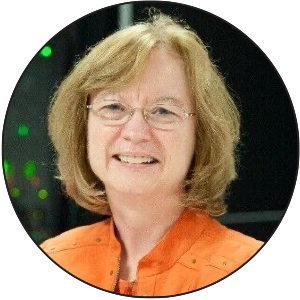
Speaker: Amy Apon, Ph.D.
Office of Advanced Cyberinfrastructure, Program Director,
National Science Foundation (VIRTUAL)
Amy Apon has been a Program Director in the Office of Advanced Cyberinfrastructure since January 2023. She is the lead Program Director for the Campus Cyberinfrastructure program. Apon joined NSF through the Intergovernmental Personnel Act in January 2023 from Clemson University. At Clemson, she served as Chair of the Computer Science Division and later as Director of the School of Computing. She holds a PhD in Computer Science from Vanderbilt University and conducts research in parallel and distributed computing systems.
Globus: Platform for Data Driven Research
In the era of data-driven discovery, researchers face the challenge of efficiently managing and sharing data. Globus, a secure and scalable data management platform offered by the University of Chicago, addresses these needs by simplifying file transfers, enabling seamless collaboration and automation, and ensuring robust data security. This presentation introduces the core features of Globus, including managed transfers, fine-grained data sharing, task automation, and integration with diverse computing environments. Attendees will gain an understanding of how Globus streamlines workflows in data-intensive research, empowering scientists to focus on insights rather than infrastructure.

Speaker: Rachana Ananthakrishnan
Executive Director, Globus, University of Chicago
Rachana Ananthakrishnan is Executive Director & Head of Products at the University of Chicago, and has a Joint Staff Appointment at Argonne National Laboratory. In her role at the university, she leads the Globus (www.globus.org) department, which delivers a research data management platform to national and international research institutions. She also serves on the WestGrid Board of Directors, and is a member of the InCommon Community Assurance and Trust Board. Her work is focused on the research and education field, and she has worked on security and data management solutions on various projects including Earth System Grid (ESG),

Securing Cyberinfrastructure Use Case
This session will provide a use case example at the Intersection of Compliance, Enterprise Security, and Research Innovation.
Speaker: Michael Benedetto
CISO and Senior Director of Infrastructure, American Museum of Natural History
Join us for this session designed to empower researchers, faculty, research computing professionals, and IT leaders with actionable knowledge to build secure, high-performance data ecosystems that advance collaborative science and education.
SPONSOR


Please contact Forough Ghahramani for additional information »
Forough is Vice President for Research and Innovation for Edge. Prior to her current role, Forough was at the Rutgers Discovery Informatics Institute (RDI2). Forough’s experience in higher education also includes teaching and academic administration. Prior to joining academia, she held senior level engineering leadership positions at Hewlett Packard (HP), also consulted to Fortune 500 companies in high performance computing environments. Forough is a Senior Member of IEEE, has an appointment to the NSF Engineering Research Visioning Alliance (ERVA) Standing Council, a Vice President for NJBDA’s Advanced and Emerging Technologies committee, serves on the Northeast Big Data Innovation Hub and the Ecosystem for Research Networking (ERN) Steering committees. Forough is also Co-Chair of the ERN Quantum Education Alliance.
Forough has a doctorate in Higher Education Management from University of Pennsylvania, an MBA in Marketing from DePaul University, MS in Computer Science from Villanova University, and BS in Mathematics with a minor in Biology from Pennsylvania State University.


We are grateful for support from the National Science Foundation
CC* Regional Networking: Connectivity through Regional Infrastructure for Scientific Partnerships, Innovation, and Education (CRISPIE) project (NSF OAC- NSF0311528)