

Navigating Technology Transformation and Budget
Pressure in a Changing Environment
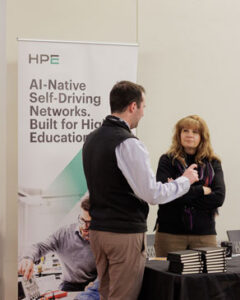
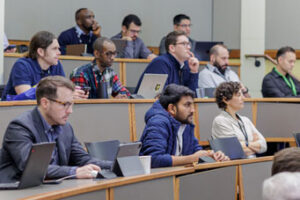
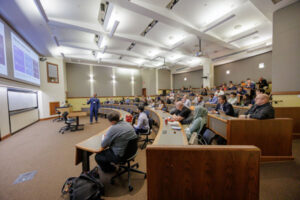
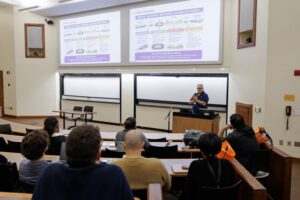
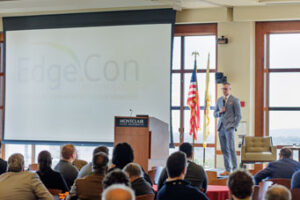
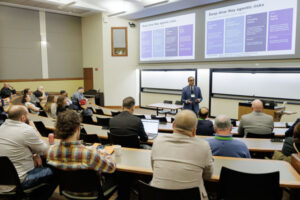
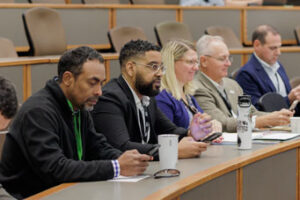
Technology is reshaping what is possible across higher education, from the way campuses operate to how students access support and services. As institutions adopt AI and other emerging tools, they are also considering what it takes to support their use through strong infrastructure, sound policies, and thoughtful governance. On October 22, 2026, higher education leaders gathered for EdgeCon Autumn at Montclair State University to explore these questions and consider how institutions can move modernization efforts forward. Conversations spanned cybersecurity, campus networks, cloud strategy, and data analytics and infrastructure, with a focus on practical approaches to putting new capabilities to work.
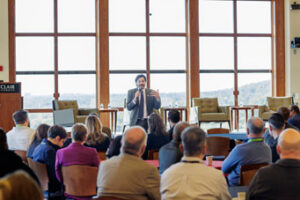

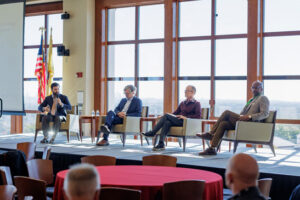
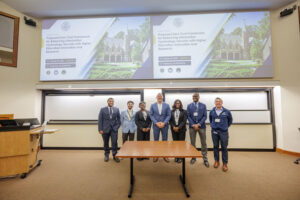






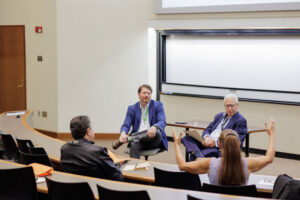


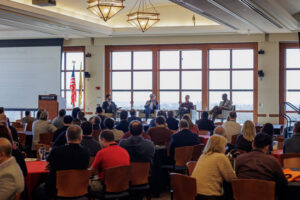
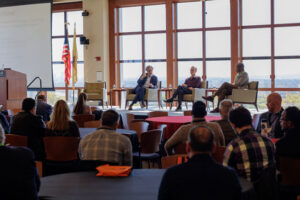
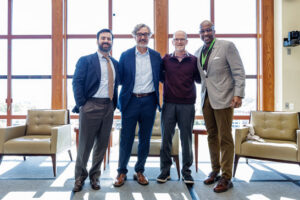
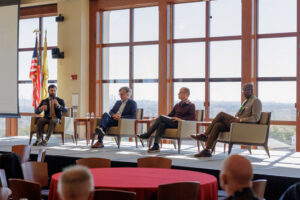
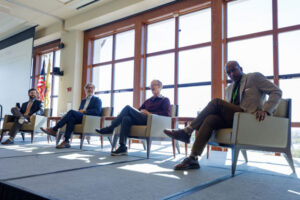
To spotlight institutional stewardship and strategy, the keynote presentation examined how leaders can balance technology transformation with budget pressures and competing priorities. Panelists, J. Michael Gower, Chief Financial Officer & University Treasurer, Rutgers, The State University of New Jersey, and Keith W. McIntosh, Ed.D., Vice President and Chief Information Officer, University of Richmond, provided a candid look at what it takes to lead through that pressure, drawing on years of respective experience working across the aisle on IT and financial strategy.
Together they explored how finance and technology leaders can protect the institutional budget while still delivering the outcomes that matter: empowering staff on the ground, delivering reliable day-to-day IT performance, navigating meaningful transformation, and incorporating the agility to respond as enrollment, funding, and expectations continue to shift. They also shared where IT and financial strategy alignment can break down, how to build a shared language around cost, risk, and priority-setting, and how teams throughout the institution can contribute to strategic decision making as part of the bigger IT-finance picture.
Balancing Information Technology with Innovation and Research
Academic freedom remains central to higher education and may call for greater flexibility in how technology is used to encourage exploration, experimentation, and creativity. In the breakout session, Case Study: Proposed Zero Trust Framework for Balancing Information Technology Security with Higher Education Innovation and Research, attendees learned how institutions can balance security with openness for research and innovation. Stan Mierzwa, Director & Lecturer; Greg Bellotti, Sr. VP of IT and CIO/CISO; and Keiron DeFreitas, Director of Enterprise Technologies; from Kean University, explained how an intentional, content-focused approach to a Zero Trust Architecture strategy and philosophy, along with a flexible structure and governance, can support research and innovation. Presenters shared findings from their case study, offering a starting point for other higher education institutions seeking to strengthen cybersecurity while giving faculty and academic departments the flexibility to do their work and explore new ideas. Rather than serving as a one-size-fits-all solution, the framework can be adapted to meet each institution’s needs and updated as new technologies and approaches emerge.
“The Edge Conference has always been an excellent networking opportunity with very informative sessions and presentations! This year's Autumn conference was exceptional with a range of AI governance and readiness, cybersecurity, and data reporting presentations along with plenty of opportunities to network and discuss successes, challenges, and improvement opportunities with fellow colleagues. Thank you for a great conference!”
– Ron Spaide, Chief Information Officer, DeSales University

How Data Drives Strategic Change at TESU
In the breakout session, From Dashboard to Decision: How Data Drives Strategic Change at TESU, Matthew Brown, Data Reporting and Strategy, and Casey Kennette, Associate Director of Operational Reporting & Analytics, from Thomas Edison University (TESU), shared how TESU develops purpose-built dashboards to track progress toward institutional goals and the business processes that catalyze meaningful operational change. Designed to serve both executive leadership and functional teams, TESU’s dashboards provide a shared view of progress on key outcomes such as registration-to-census and term-to-term retention. Presenters explained that insights from these dashboards became the foundation for cross-departmental collaboration and process improvement. By connecting data insights to tactical adjustments, the University created a feedback loop which enables student engagement, process refinement, and accelerates strategic impact. Brown and Kennette shared principles for designing and implementing similar systems at their own institutions, including strategies for stakeholder engagement, performance tracking, and fostering a culture of data-informed decision-making.
Institutional Language as a Measurable Asset
Institutional text can hold as much valuable insight as a spreadsheet of numbers. Student comments, policy documents, syllabi, and strategic goals all contain information that can be analyzed to help institutions better understand their practices and populations. Viktoria Popova, Executive Director of Institutional Effectiveness, Analytics and Planning at Centenary University, explained that institutions often overlook this information because it is labeled “qualitative” and treated as difficult to analyze.
In this session, Popova demonstrated how transformer-based embedding models can turn institutional text into data that can be analyzed for patterns, alignment, and changes across practices and populations. The approach offers a way to bring narrative and open-ended feedback into assessment and planning, helping institutions draw measurable insights from information they already collect. The presentation centered on three applied use cases: thirteen years of accreditor language tracked as its meaning quietly drifts, alignment scores computed between learning outcomes and assignments, and shifts detected across longitudinal student feedback. Each yielded quantitative measures that were auditable and reproducible. The session encouraged attendees to recognize the valuable text already held within higher education systems and consider how it can be transformed into measurable insights.
“Overall this was another excellent event.
I particularly enjoyed Dawn's session as well as my first EdgeCon presentation.”
– Robert Doster, CIO, Ramapo College of New Jersey

Cybersecurity and Vulnerability Management in the Age of AI
In the breakout session, Vulnerability Management in the Age of AI: Separating Signal from Myth, Jeremy Livingston, CISO & Deputy CIO, and Rafat Azad, Associate Director, Information Security Services, of Stevens Institute of Technology, led a discussion on governance, decision-making, and accountability in vulnerability management programs. They explained that the challenge for security leaders is no longer just managing vulnerabilities, but managing the narratives around them. AI is changing how vulnerabilities are discovered, weaponized, and prioritized, yet many organizations struggle to translate these changes into meaningful risk reduction. The discussion highlighted the importance of looking beyond the volume of vulnerabilities to focus resources on the risks that matter most.
In Cybersecurity 2030: Moving Towards a Career-ready Program in the AI Era, John Agar, Academic Specialist - Computer Science, and Quba Raza, Academic Specialist - Cybersecurity, of Union College of Union County, NJ (UCNJ), gave an inside look at the approach their institution is taking to prepare students for an evolving threat environment. They explained that AI is poised to have a significant impact on cybersecurity. While AI can support activities such as triage, response, and threat detection, attackers can also use it to enable phishing, deepfakes, and new forms of attacks that may emerge as the technology advances. Agar and Raza showed examples of how they added and incorporated AI principles and tools to both current and proposed courses. They also explored how their research agenda will add additional opportunities for UCNJ students to prepare for future threats and opportunities. Attendees left with a clear blueprint for modernizing and preparing their students for the current and future needs of the cybersecurity field.
Modernizing Research Compliance and the Road to AI Governance
For years, grant and subaward reporting at Harrisburg University relied on siloed spreadsheets, a legacy Jenzabar system, and manual data imports that depended on staff availability. Although the process kept things moving, it made errors easy to overlook, accountability difficult to track, and potential misspending or subaward risks harder to identify before they became problems. In Silos to Single Source: Modernizing Research Compliance, Controls, and the Road to AI Governance, Julia Dunst, Director of Research, Grants, Compliance, and Lauren Durkin, Director of Accreditation and Assessment, from Harrisburg University of Science and Tech, shared how they built their own platform in-house, server-based, with centralized access controls and one source of truth for all our research and grant data. In this session Dunst and Durkin explained how they identified the compliance gaps in the old process, what controls were built into the new system, and how it changed their visibility into subawards and final reporting.
Sharing Lessons Learned
Ron Loneker, Jr., Director, IT Special Projects at Saint Elizabeth University, led the presentation, So You're Implementing a New Cloud Application - Let's Talk About Lessons Learned, sharing insights from more than 20 years of experience with enterprise system implementations. He emphasized that successful implementations require collaboration across campus and careful planning at every stage, from assembling the right team and reviewing business practices to migrating data, going live, and transitioning the system to its ongoing owner. The session also highlighted challenges specific to cloud-based systems and gave attendees an opportunity to share lessons from their own implementation experiences.
During How to Fail Safely: Keeping the Modern Campus Running Through Cyber Disruption, Dr. Dawn Dunkerley, Virtual Chief Information Security Officer, Edge, explored how institutions can prepare for disruptions that security measures cannot always prevent. She emphasized that recovering from a cyber incident involves more than restoring technology. Leaders also need to determine which services must continue, what can operate with limited functionality, what can pause, and who has the authority to make those decisions. The session focused on cyber resilience from an institutional perspective, using higher education scenarios to examine essential services, dependencies among systems, vendors and people, and decision-making responsibilities.
In another breakout session, Lessons Learned from Building and Operating a Statewide Optical Network, Edge’s Jim Stankiewicz, Associate Vice President & Principal Network Architect, and Bruce Tyrrell, Associate Vice President Program & Services, shared a practitioner’s perspective on more than 20 years of operating EdgeNet, Edge’s purpose-built optical fiber network designed to meet the needs of higher education. Drawing on hands-on experience designing, deploying, and operating a statewide Dense Wavelength Division Multiplexing (DWDM) optical transport infrastructure, they discussed the technical and operational lessons learned along the way and how those insights have shaped services that support innovation across the Edge community
Referencing examples of member institutions with high-demand network needs, the presenters explored how a shared statewide optical backbone can provide scalability, resilience, and cost efficiency, while freeing internal IT teams to focus on innovation rather than infrastructure upkeep. They also highlighted managed optical fiber services that combine existing or new fiber assets with Edge-provided hardware and expertise to support campus-to-campus and campus-to-data-center connectivity, offering insights into network design, operational practices, and the value of a managed partnership model.






AI-driven Fraud Prevention
Mercer County Community College (MCCC) successfully migrated to a SaaS environment several years ago but recognized the need to provide institutional leaders with faster access to trusted data, analytics, and reporting. The College sought an integrated platform that could deliver actionable insights into key institutional priorities, including admissions, enrollment, student success, degree progress, and completion. During the breakout session, How an Analytics Implementation Led to AI-driven Fraud Prevention, Carolyn Walsh, Director of Enterprise Applications, MCCC, and Emily Bonham, Sr. Analytics Manager, Higher Education, Voyatek, shared their experience implementing an analytics solution. Following a comprehensive readiness assessment, Mercer partnered with Voyatek to implement the Student Success Analytics Cloud platform, creating a unified foundation for strategic decision-making and operational reporting across the institution.
During the implementation of the Admissions Analytics module, Mercer saw a significant increase in fraudulent and “ghost” student applications. Rather than treating the issue as a separate initiative, the College expanded its existing implementation to include Voyatek’s Application Fraud Detection and Identity Verification module. The solution helped Mercer identify and stop fraudulent applications before they entered the enrollment pipeline, supporting a more accurate incoming class and preventing inflated enrollment metrics. Bonham and Walsh also shared that the platform reduced the time and cost associated with manual fraud detection, identity verification, and data cleanup, allowing staff to focus on supporting legitimate students and advancing institutional goals.
Networking Monitoring and Beyond
As institutions rely on their networks to support more critical systems and services, keeping those networks reliable and available has become increasingly important. In Networking Monitoring and Beyond, Michael McGuire, Network Operations Manager, Monmouth University, discussed how comprehensive network monitoring can help institutions maintain reliable uptime, identify potential issues, and support the systems that depend on the network. The session covered the importance of monitoring not only network devices but also the systems and infrastructure they rely on. Using tools such as PRTG Network Monitor and SNMP, institutions can gain deeper visibility into critical components of Cisco and HPE Aruba switches, Palo Alto firewalls, APC UPSs, and other infrastructure. McGuire also explored monitoring across key areas, including utility and backup power, environmental conditions, internet bandwidth, uplink performance and capacity, server availability and performance, and essential client devices.
Reframing Knowledge Resilience for the Post-Constraint Era
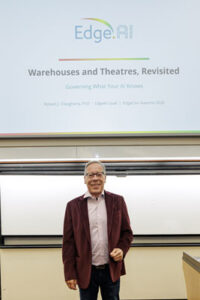
At the Winter EdgeCon in 2024, Edge argued that institutional knowledge is a theatre, not a warehouse; where its value comes from what an institution chooses to put on stage. Since then, AI tools have changed the equation. Connectors, enterprise search, and long context windows make it possible to “point AI at everything,” raising new questions about how institutions manage, maintain, and trust the information AI uses. During the session, Warehouses and Theatres, Revisited: Governing What Your AI Knows, Edge’s Robert J. Clougherty, AI Lead, discussed knowledge resilience in this post-constraint era, and introduced a Knowledge Resilience Grid based on two questions: Is the knowledge documented or practiced, and is it current or stale? The discussion highlighted a counterintuitive risk: documented but outdated information can be more dangerous than undocumented knowledge when AI repeats it with authority. The session also examined a new potential point of failure: the unversioned and unstewarded instructions behind campus chatbots. Clougherty offered practical approaches to building more resilient AI knowledge systems, explained how to use stage metrics to measure knowledge resilience, and shared a Walk-Out Audit for attendees to assess their own teams and information systems.
“I want to thank the entire Edge team for all the hard work, dedication, and effort that made EdgeCon Autumn 2026 such a successful event. From behind-the-scenes planning and coordination to bringing together industry leaders, members, and partners, the team consistently delivers an outstanding experience. These events provide tremendous opportunities to connect, share ideas, strengthen relationships, and have meaningful conversations about the challenges and opportunities facing our education and technology communities. On behalf of the ePlus team and me, we truly appreciate everything you do and the partnership we've built with Edge.”
– Joseph Baranski, Account Manager, ePlus

Hardening External Defenses with Bitsight
Higher education institutions face escalating cyber threats against sprawling IT footprints, making it critical for organizations to understand their external attack surface. Robert Doster, Chief Information Officer, Assistant Vice President Information Technology Services (ITS), Ramapo College of New Jersey, led attendees through the breakout session, Hardening External Defenses with Bitsight, to give a walkthrough of this leading security ratings platform. Doster showed attendees how to continuously monitor and evaluate their institution's exploitable vulnerabilities from an outside-in perspective. Participants also learned how to interpret Bitsight's risk vectors, benchmark their security posture against peer institutions, and prioritize findings based on real-world exploitability rather than guesswork. Attendees left with helpful strategies for using external monitoring not just as a scorecard, but as a proactive tool for strengthening their institution's overall security resilience.
Architecting Intelligence for Equity
Jill C. Anderson, Vice President, Development & Alumni Engagement, Moravian University, led the breakout session, Presidential AI Task Force: Architecting Intelligence for Equity, to talk about accelerating AI transformation across an entire institution while managing risk, ensuring accountability, and keeping equity at the center. Attendees learned about Moravian’s Presidential AI Task Force journey, a thirteen-month initiative that built the infrastructure, policies, and culture needed to responsibly integrate AI into teaching, learning, and operations. Anderson shared a look into the systems they built to move their institution from resistance to reliance and creating an inclusive governance structure that gave every stakeholder voice and ownership. She shared how reframing AI as an empowerment tool reduces workload rather than replacing expertise and developing cross-functional committees helps break down silos and create champions across departments.
Building a Modern Integration Architecture
With Rowan University managing over 1,500 legacy, point-to-point integration jobs within their orchestration platform, the legacy environment created significant technical debt and limited reusability, making the integrations harder to maintain and support over time. In the breakout presentation, From Legacy to Reusable: Building a Modern Integration Architecture for Higher Education, Rowan’s Paul Grossman, Associate Director; Mahmudul Siddiquee, Software Architect; and Rishi Vardhan Nallan Chakravarthula, Senior Business Application Developer, introduced their "Integrations Modernization and Architecture Blueprint" for moving to a modern orchestration platform built around Domain-Driven Design (DDD), shared reporting views, and reusable APIs.
Attendees learned a realistic approach to modernizing higher education integrations while reducing technical debt and improving long-term maintainability. They also shared how they selected a pilot, validated the approach against business processes, and built a foundation for future integrations. Whether participants are involved in application development, enterprise architecture, integration strategy, or higher education technology planning, this session provided ideas to apply at their institution.












Agentic AI Security
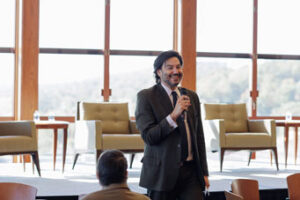
In Agentic AI Security (Agent Security, Risk and Compliance), Amad Sheikh, CISO, University of Delaware, shared how higher education leaders are under significant pressure to demonstrate AI adoption as a signal of innovation and relevance. Unfortunately, the pace of adoption has dramatically outpaced institutions’ ability to govern it, creating a growing gap between AI’s capabilities and institutional understanding of how those capabilities are being put to work. Sheikh explained how to translate complex technical risk into language built for academic leadership. He explored real-world scenarios and provided concrete technical and policy controls for challenges such as sharing sensitive student and research data with public AI platforms and deploying autonomous agents across institutional systems without human oversight. The presentation also introduced a clear five-step accountability framework, a maturity model for assessing an organization’s AI governance posture, and steps for determining whether the necessary safeguards are in place for responsible use.
Checking in on AI Adoption
At EdgeCon Winter 2026, Moe Rahman, AVP/CIO, Community College of Philadelphia; Chris Treib, VP of Information Technology, Geneva College; Trish Clay, AVP/CIO, Hudson County Community College; John Bruggeman, vCISO, CBTS, came together to explore AI's emerging role across academic excellence, campus operations, governance, and cybersecurity. Now, nine months later, the landscape looks different. This group of presenters reconvened at EdgeCon Autumn to host a follow-up panel to explore which predictions held up, which ones didn’t, and where governance frameworks met real-world friction. They shared candid lessons from implementation, including where AI delivered on its promise in student success and operational efficiency, where bias and fairness concerns moved from theoretical to urgent, and what CISOs and CIOs are actually doing to address cybersecurity risk. Attendees gained practical takeaways on AI policy iteration, access control approaches that held up under pressure, and an honest look at the challenges higher education is still working to solve.
Expanding on how institutions can build a strong foundation for emerging technologies, Adam Stone, Chief Technology Officer, ePlus Technology, and Manuel Vilarino, Director, Information Technology, Hunterdon County, hosted the session, From Infrastructure Modernization to AI Readiness: Building the Foundation for What's Next. Together they discussed how higher education institutions and local government entities can prepare their technology environments for the growing demands and opportunities of artificial intelligence. Using a real-world public-sector infrastructure transformation as a framework, the presenters demonstrated how modernizing network, security, data center, cloud connectivity, and operational capabilities can create the groundwork needed to support a successful AI strategy and prepare organizations for what's next.

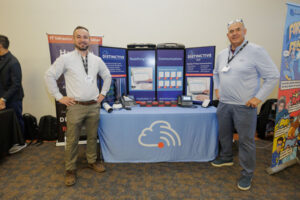
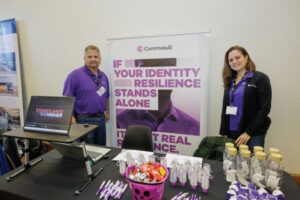
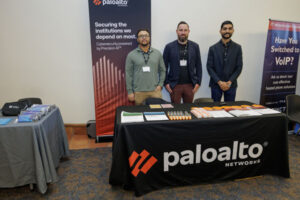

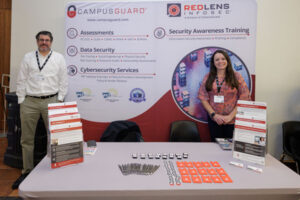
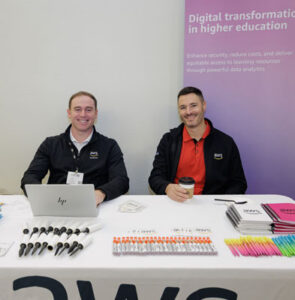
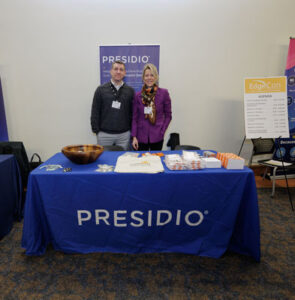
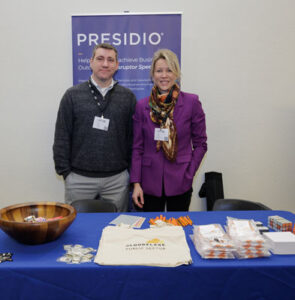
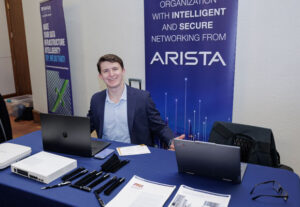
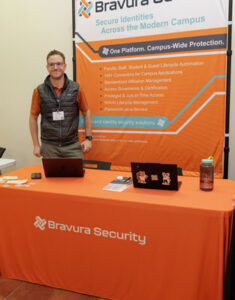

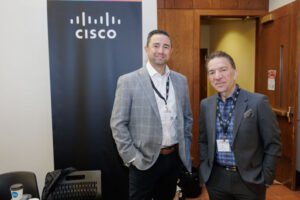






Thank you VIP Sponsors


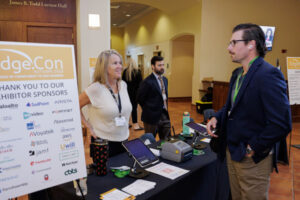
Thank you Exhibitor Sponsors

Abnormal
Arista

aws
Bravura Security
campus guard
cbts

cohesity - HEP
commvault
distinctive

eplus

Form Assembly

Fortinet

jamf

keyboard consultants
n2n

NetApp
PKA

presidio

SHI

Velocity Tech

blank

Voyatek

Wevideo
Thank you Lanyard Sponsor