
When Digital Learning Becomes Infrastructure: What Changes for Teaching and Learning
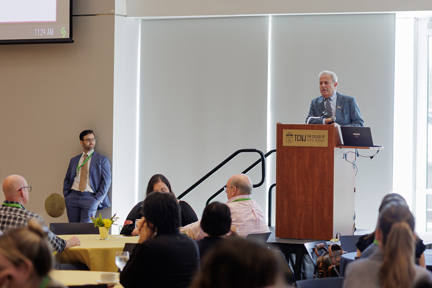
Digital learning has moved far beyond the experimental stage in higher education. Today, learning platforms, data analytics, AI-powered tools, and flexible online and hybrid delivery models are deeply embedded in the daily fabric of teaching, advising, assessment, and student communication. For many institutions, these technologies have quietly become core infrastructure and are shaping academic practice, decision-making, and the student experience, often without even being explicitly recognized as such. This theme was a central focus of EdgeCon Spring 2026, hosted at The College of New Jersey on April 16, 2026, and during the keynote presentation, When Digital Learning Becomes Infrastructure: What Changes for Teaching and Learning.
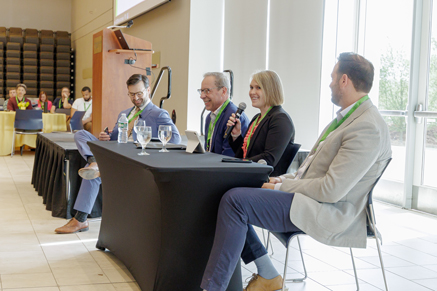
Rather than focusing on emerging trends, the keynote panel centered on institutional maturity and how roles and responsibilities shift as digital learning becomes infrastructure. Panelists explored how decisions affecting pedagogy, accessibility, equity, and academic quality are increasingly made through systems, policies, and vendor configurations, and where responsibility for those decisions truly lie. The conversation explored how institutional structures, governance models, and technology ecosystems influence teaching and learning behind the scenes, and what happens when the desire for speed, scale, and automation collides with the need for quality, trust, and accountability. Panelists also discussed where institutions are intentionally slowing down, adding guardrails, or revisiting assumptions as digital learning continues to scale.



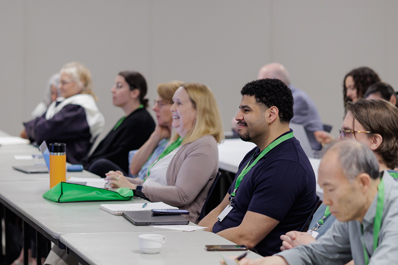
Using Data for Digital Program Development
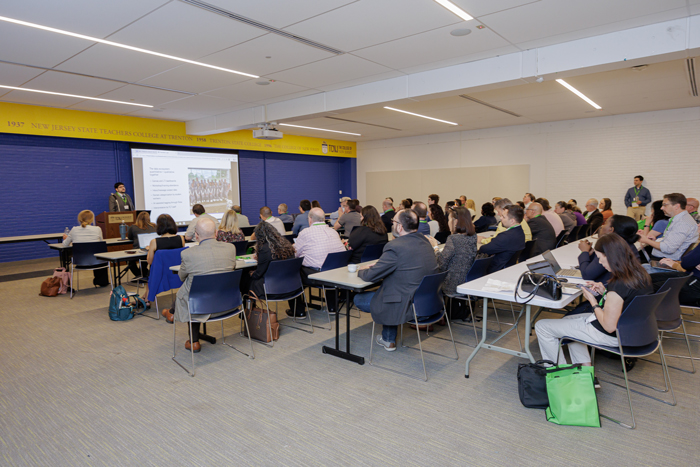
One of the morning breakout sessions, From Insight to Innovation: Using Data and Market Analytics to Inform Digital Program Development, was presented by Nicole Suprun, Associate Director of Planning; Kelly Oquist, Director of Academic Finance, and Jessica Kay, Director of Institutional Research from Stockton University. The session explored how Stockton is integrating labor market intelligence, enrollment trends, and academic program analytics to guide the development of new digital and hybrid programs. The presenters discussed their Gray Decision Intelligence (Gray DI) platform that brings together expertise from institutional research, academic leadership, finance, and enrollment teams.
The presentation also highlighted how market data, student demand indicators, and competitive landscape analysis can help institutions identify opportunities for new digital offerings, evaluate program viability, and align program development with institutional priorities such as access, workforce relevance, and long-term sustainability. Attendees gained practical considerations for incorporating data into academic planning processes, including faculty engagement, governance pathways, and balancing quantitative insights with academic mission and disciplinary expertise.
Designing Assignments in the Age of Artificial Intelligence
As AI tools become more sophisticated and accessible and students improve their proficiency in using them, educators face increasing uncertainty about the reliability of AI and plagiarism detection software and how to interpret the results. Jarrod Cecere, Instructional Designer, Seton Hall University, led the session, AI or Not? Designing Assignments in the Age of Artificial Intelligence, to examine the increasingly difficult challenge of detecting AI-generated student work and its implications for academic integrity and instructional design. He began with a game to challenge participants’ AI identification skills and then examined the limitations of detection software by comparing two approaches to assessment design. Cecere examined “AI-proofing” assignments that minimize the potential for student AI assistance and creating assignments that require students to leverage AI as part of the process, including the pedagogical and ethical challenges and benefits of each approach.
“I have attended many educational technology conferences and this is one of the finest. In particular, I really enjoyed the spectrum of professionals who attended. There were folks in IT, teaching in K-12, and a few academics. That diversity made the conversations quite interesting. Also, there was a true sense to me of collegiality, everyone was so nice and professional.”
– Dermot Foley
Associate Director of Online Education
Lehman College, CUNY



Institution-wide AI Faculty Development
At The College of New Jersey (TCNJ), the Center for Excellence in Teaching and Learning (CETL) partnered with faculty colleagues across campus to design and launch a five-week, online, stipend-supported certificate program to support more than 55 full-time faculty in moving from isolated experimentation with AI toward intentional, discipline-informed engagement in their teaching and research. In this session, the TCNJ team of Joseph Baker, Professor, Department of Chemistry; Judi Cook, Executive Director, CETL; Ellen Farr, Director of Online Learning, CETL; Rebecca Hunter, Associate Professor, Department of Chemistry; John Oliver, Information Literacy Librarian; and Andrea Salgian, Professor, Department of Computer Science, shared the institutional choices that shaped the program’s design, the adjustments they made in response to faculty realities, and what participant data revealed about what actually supports sustained engagement.
The team discussed how they used the Canvas LMS to deploy the CETL AI Faculty Institute, leveraged their new One Button Recording Studios to create content introducing each week’s module, and created a forum space within the Canvas course for faculty to interact with one another as they experimented with AI tools and explored fundamental AI literacy. Attendees left with a replicable program framework, implementation lessons grounded in practice, and a reframing of AI faculty development—not as a one-time workshop, but as a durable, sustainable institutional infrastructure.
Entering a New Era of Digital Learning
As artificial intelligence becomes increasingly embedded in learning management systems, instructional tools, and institutional decision-making, higher education is entering a new phase of digital learning, one defined not only by access to technology but by the values and assumptions encoded into it. Systems designed to support teaching and learning are now shaping what counts as engagement, rigor, integrity, and success. Yet many of these systems still operate on inherited models of standardization, compliance, and surveillance, models that often privilege the most advantaged users while intensifying barriers for those who are least resourced, least confident, or most vulnerable to exclusion.
Behind the Veil: Designing Just Digital Learning in the Age of AI, led by Steven D'Agustino, Senior Director for Online Programs, Fordham University, and Joshua Gaul, Chief Information Officer, SUNY Schenectady County Community College, introduced a philosophically grounded but highly practical framework for evaluating digital learning design through the lens of John Rawls’s veil of ignorance. Rawls’s thought experiment asks designers to build institutions without knowing what role they will occupy within them, whether student or instructor, advantaged or marginalized, digitally fluent or struggling. Applied to digital learning systems, this lens reveals how common institutional defaults, including rigid deadlines, narrow definitions of participation, and high-stakes assessment structures, are now being amplified by AI-enabled systems such as integrity tools and proctoring platforms, predictive analytics dashboards, and automated feedback systems.
Participants explored instructional design as a form of moral architecture and were introduced to a Rawlsian Design Audit, a set of guiding questions that can be applied to course design, institutional policy, and learning technology governance. Using examples drawn from common LMS practices and emerging AI-enabled tools, the presenters examined five design domains, including time, communication, assessment, navigation, and institutional governance. Attendees left with a concrete, reusable framework and checklist for evaluating whether digital learning environments are being built primarily for efficiency and scale, or for justice, inclusion, and human dignity.



Combining AI and Universal Design for Learning (UDL)
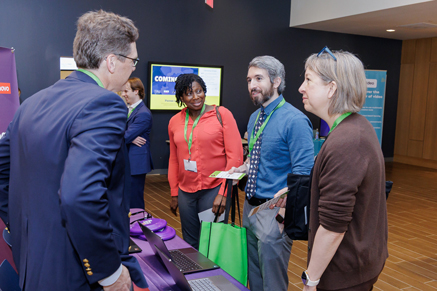
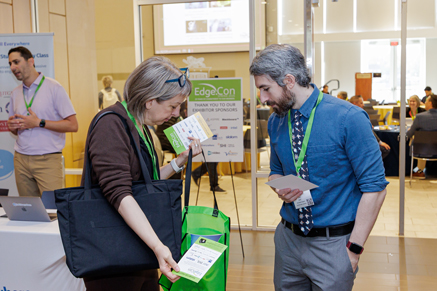
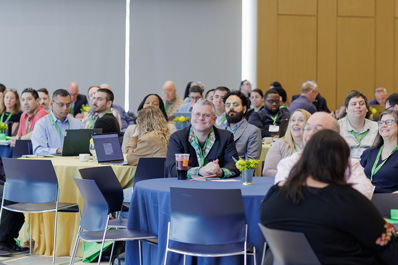
Designing a course that works across different learning formats can feel overwhelming, especially as faculty balance accessibility, engagement, and academic rigor. In the breakout session, One Course, Many Formats: AI + UDL for In-Person, Hybrid, and Online Learning, Jaimie Dubuque, Learning Technology Administrator, Ellucian, examined how AI grounded in UDL can help instructors design once and adapt intentionally across multiple learning environments. Dubuque explained that AI can create multiple means of engagement, representation, and expression based on the course, and help anticipate and reduce barriers before students encounter them. Through practical examples and adaptable prompts, attendees left with concrete strategies for building resilient, inclusive courses that translate effectively across in-person, hybrid, and online settings.
Meeting the Needs of Today’s Students
As educators in a rapidly evolving digital world, Berkeley College is on a mission to design learning experiences that reflect the real-world communication demands and creative possibilities students will encounter in their future careers. In Reimagining Intro to Comm: Voice, Choice, and Digital Design, Victoria Ghilardi, Senior Learning Experience Strategist at Berkeley, shared how their institution co-designed communication projects that empowered students to create compelling multimedia content, respond to realistic scenarios, and engage meaningfully with their peers.
In another breakout session, Academic Feedback Intelligent Assistant, Directors Mariola Pogacnik and Jennie Wong from Slalom, Inc. discussed how academic learning is an iterative process that relies heavily on fair, effective, and timely feedback. However, overwhelmed faculty and administrative burnout often lead to feedback that is delayed or inconsistent, negatively impacting student motivation and engagement. Pogacnik and Wong discussed the ways institutions can leverage Generative AI to solve the "grading bottleneck" without removing the human educator from the equation.
The presentation included a case study from the UCLA Anderson School of Management, detailing the development and implementation of the Academic Feedback Intelligent Assistant (AFIA). Attendees also explored the technical architecture and the proprietary prompt design strategies used to ground AI outputs in educational best practices. Slalom shared pilot results demonstrating how AFIA improved feedback consistency and reduced the time course assistants spent writing comments by approximately 50%, ultimately freeing up educators to focus on high-value student interactions.
“EdgeCon continues to be an excellent conference providing valuable networking opportunities, relevant content, and vendor engagement. Keep up the great work!”
– Bradley Morton
VP for IT
Passaic County Community College

Employing Data-Driven Decision-Making
Aaron Colaiacomo, Sr. Instructional Technologist, Providence College, joined EdgeCon to share how their institution leveraged Canvas analytics to move beyond course-level insights and build a data-informed annual report that directly shapes academic and operational decision-making. Drawing on real dashboards and reporting workflows, the presentation showed how LMS engagement data is aggregated, contextualized, and translated into narratives that inform faculty development, instructional design priorities, resource allocation, and long-term digital learning strategy.
The session also highlighted how categorization of email subject lines and communication patterns, supported by AI-assisted tagging and analysis, adds a critical layer to understanding student support, outreach effectiveness, and institutional responsiveness. By connecting LMS data, internal databases, and communication analytics, the institution can create a more holistic picture of how digital learning ecosystems function in practice. Attendees also learned practical approaches to building scalable dashboards, aligning analytics with institutional goals, and using AI ethically and transparently to support decision-making.
Producing High-quality Digital Tools
Drawing on two decades of experience in television and digital media, John Baldino, Director, Center for Teaching and Learning and Assistant Professor, Lackawanna College, shared how educators can strengthen their courses with compelling video content in As Seen on TV: Using Television Best Practices in Video Lectures. Grounded in best practices in television and online video shaped by consumer behavior, this session provided practical strategies for producing engaging, high-quality video for both online and on-ground learning, blending proven media techniques with today’s digital teaching tools.
In the breakout session, Nothing About Students Without Students: Co-Designing AI Curriculum, Policy, and Research for the Next Generation of Business Leaders, Yaw Adoo, Department Chair of Business, and Sterline Caldwell, Assistant Professor of Mathematics, from Morris Brown College explored how faculty-student collaboration strengthens academic integrity, accelerates curriculum relevance, and expands innovation capacity within HBCU business schools. This presentation argued that effective AI curriculum, policy, and research design must include students as active partners rather than passive recipients of rules. Traditional top-down approaches struggle to keep pace with AI’s rapid evolution, often leading to ambiguity, inconsistent enforcement, and mistrust.
When students help shape the systems they are expected to follow, Adoo and Caldwell explained, they are more likely to uphold them, emerging as graduates prepared not only to use AI tools but to lead responsibly in AI-enabled organizations. Attendees also gained a roadmap for integrating student voice into AI governance to enhance accountability, trust, and real-world readiness.
Turning Online Access into Real Engagement
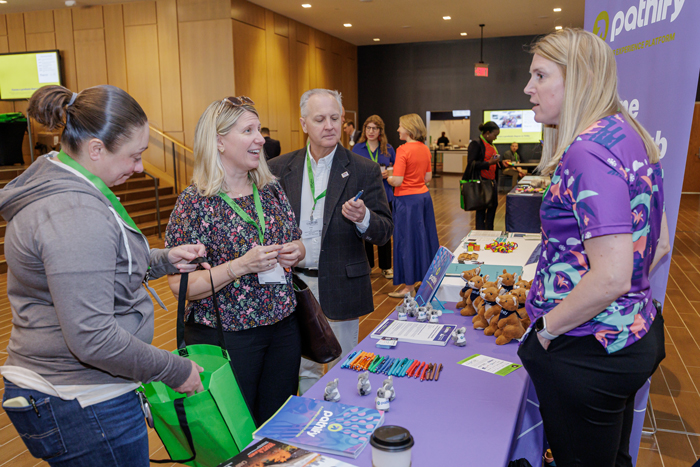
Online learners and faculty often exist at the edges of campus culture and are engaged in academics but disconnected from the community. In the session, The Modern Digital Campus: Turning Online Access into Real Engagement and Community, Lindsey Haynes, Director of Franciscan Life Online, Franciscan University of Steubenville, and Allison Dean, Account Executive, Pathify, explored how institutions are using a unified campus experience platform built around the specific needs of online and hybrid learners to replicate the richness of the physical campus in a digital environment.
Presenters showed how intentional segmentation and student-centered design drove online student awareness of resources from 69% to 94% and how institutions of any size or model can apply the same approach to close culture gaps and extend a sense of belonging to adjunct and online faculty. Institutions that were rethinking student engagement or looking to better support their distributed teaching community received a practical, replicable framework for building a digital campus that works for everyone.
Collaborative Open Pedagogy Planning and Execution
Dermot Foley, Associate Director of Online Education, Center for Teaching and Learning, Lehman College, CUNY, joined EdgeCon to share the strategic design of a Wikimedia initiative at Lehman College that conceptually resituates students from passive consumers into active knowledge producers. Reimagining Adult Learning through Collaborative Open Pedagogy Planning, Design, and Execution presented a pedagogical model for using Wikipedia to teach digital literacy and public scholarship, and a replicable "collaboration map" for identifying and engaging cross-campus stakeholders. By highlighting the specific roles and positive interplay of these departments, Foley demonstrated how reimagining adult learning starts with reimagining how we work together.
“I found the sessions very useful!”
– Robert Doster
CIO
College of New Jeresy

 Save the Date
Mark your calendars for October 22, 2026! Be part of the next exciting conversation and join fellow educators, technologists, and institutional leaders at EdgeCon Autumn at Montclair State University. Come gain fresh insights, real-world strategies, and meaningful opportunities to collaborate and drive your organization’s initiatives forward.
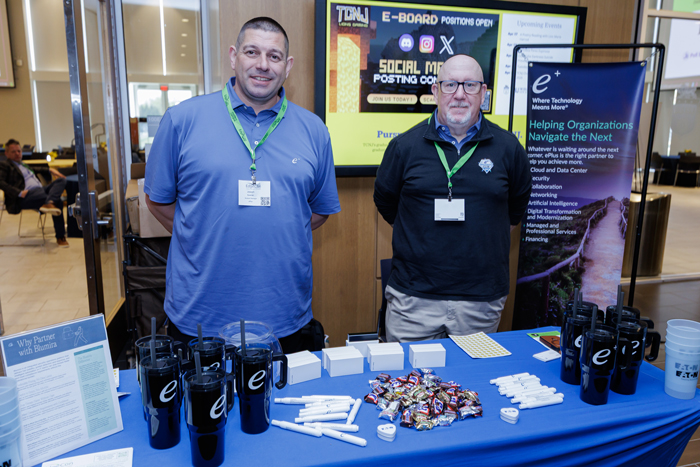

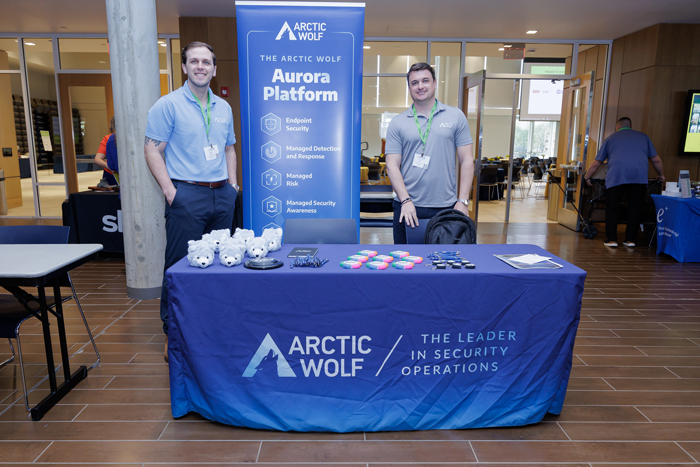
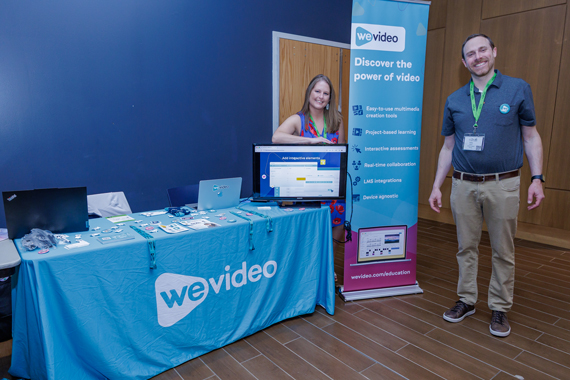
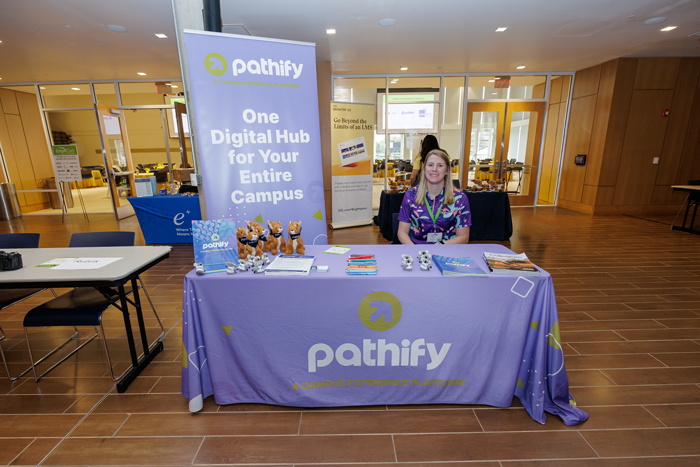
VIP Sponsor

blank

slalom
Exhibitor Sponsors

Artic Wolf

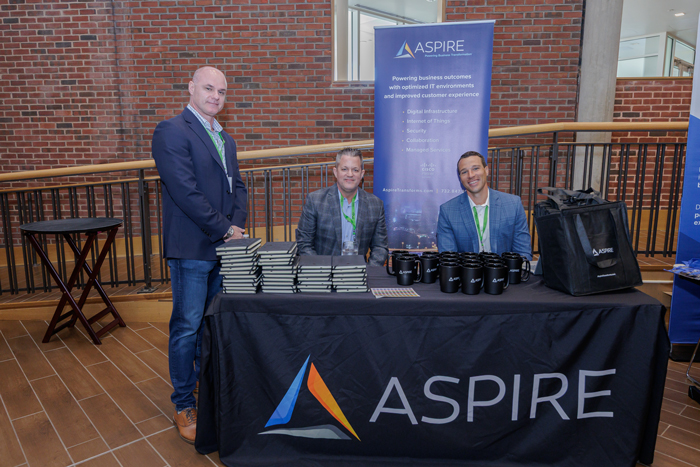
Aspire

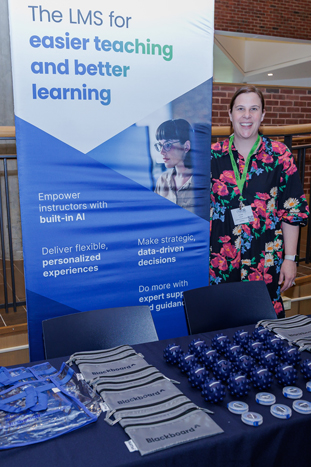
Blackboard

D2L

e+

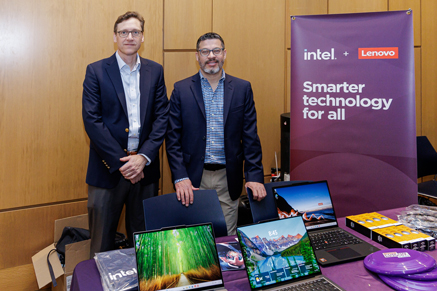
Lenovo x intel

pathify
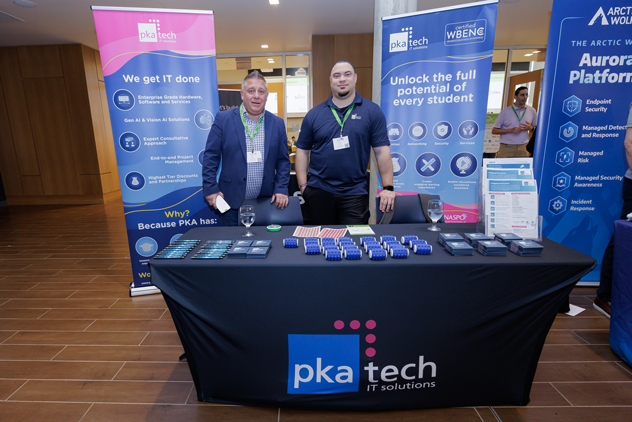
pka tech

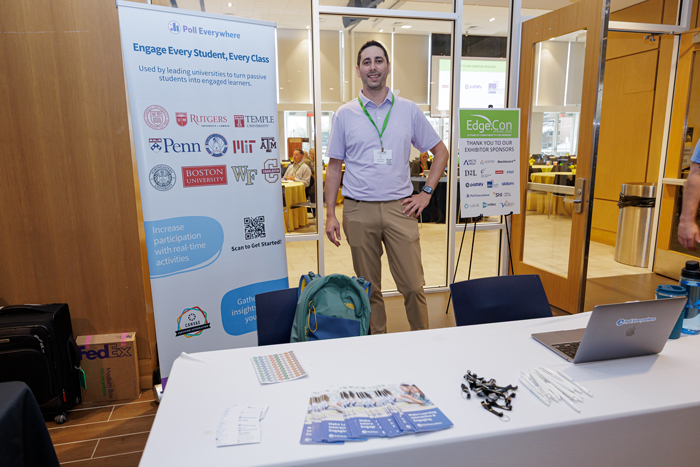
poll everywhere

rubrik
blank

SHI

we video

Lanyard Sponsor
blank
blank
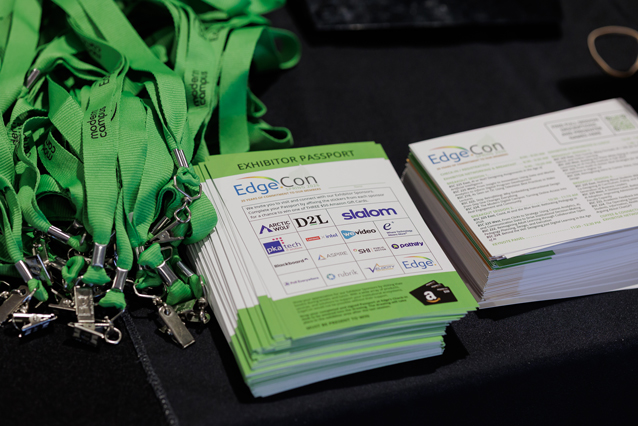
modern campus