Transforming Students into Active Knowledge Producers
Using Wikipedia to Teach Digital Literacy and Public Scholarship
Colleges and universities continue to seek new ways to engage students through learning experiences that go beyond memorization and foster deeper engagement with ideas, information, and the communities around them. Rather than simply consuming facts and data, students can become active contributors to the creation and sharing of knowledge. At Lehman College, that shift took shape through an innovative Wikipedia initiative that grew out of both a practical challenge and a broader commitment to active learning.
The idea emerged through the College's Center for Teaching and Learning (CTL), which supports faculty in addressing pedagogical challenges and exploring new instructional approaches. For several years, the CTL had offered workshops focused on helping faculty locate and incorporate open educational resources (OER) into their courses. When funding requirements shifted to emphasize the creation of open educational content rather than simply the use of existing resources, CTL leaders began looking for new ways to engage faculty and students in producing publicly accessible knowledge.
 As they explored ways to meet the new requirements, educators saw potential in using Wikipedia as a teaching tool. “Rather than asking students to create entirely new pages, the initiative encouraged them to improve existing articles, particularly underdeveloped topics that reflected issues and communities in the Bronx,” says Dermot Foley, Associate Director of Online Education, Center for Teaching and Learning, Lehman College, The City University of New York (CUNY). “This approach aligned naturally with research on active learning while creating opportunities for students to contribute to a platform used by millions of people around the world. Rather than viewing students as passive recipients of information, active learning gives them greater agency in the educational process, and studies have shown that approach can lead to stronger outcomes.”
The initiative was launched as a pilot in March 2026 following a planning phase that began the previous fall, developed through collaboration between the CTL; Stacy Katz, librarian and faculty member at Lehman College; and CUNY’s Wikimedian-in-Residence, Richard Knipel. “I shared the challenge with Stacy and she proposed Wikipedia as a potential solution,” shares Foley. “From there, we connected with colleagues across CUNY and began building a framework that could support faculty while creating meaningful opportunities for student engagement and public knowledge creation. The pilot is expected to continue into the fall semester to allow time for faculty to design assignments and for students to contribute their work.”
Wikipedia is commonly known as a free, web-based encyclopedia built on collaboratively edited entries, but is supported by the Wikimedia Foundation, a nonprofit organization that oversees a wider network of projects dedicated to open access and knowledge sharing. “Within this system, Wikipedia focuses specifically on creating and maintaining neutral, well-sourced encyclopedia articles, while the broader Wikimedia movement supports additional tools and initiatives related to open knowledge, including data and infrastructure projects that help sustain the platform. As part of the project’s open-access approach, student contributions and related instructional materials are shared through the CUNY Academic Commons, a publicly accessible platform, and published under a Creative Commons license—allowing educators and others to freely use, adapt, and build upon the materials with proper attribution to the original source. “In this case the instructors submit their assignment and other work they developed, the CTL reviews that work, and then if no further work is required, it is uploaded to the CUNY Academic Commons,” explains Foley.
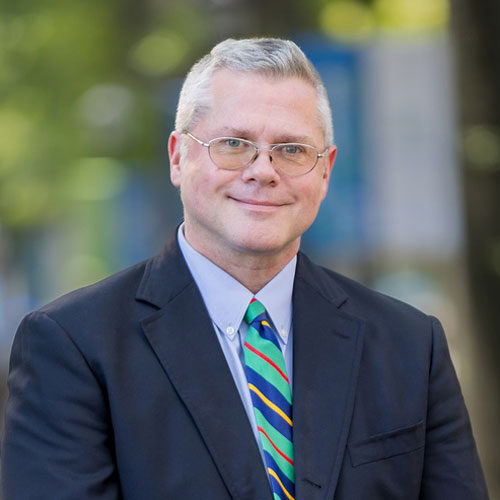
“Rather than asking students to create entirely new pages, the initiative encouraged them to improve existing articles, particularly underdeveloped topics that reflected issues and communities in the Bronx. This approach aligned naturally with research on active learning while creating opportunities for students to contribute to a platform used by millions of people around the world. At the same time, the idea aligned closely with research on active learning. Rather than viewing students as passive recipients of information, active learning gives them greater agency in the educational process, and studies have shown that approach can lead to stronger outcomes.”
– Dermot Foley
Associate Director of Online Education, Center for Teaching and Learning
Lehman College, The City University of New York (CUNY)
Reframing Wikipedia as a Rigorous Learning Tool
While the initiative aligns with active-learning principles, Wikipedia's role in higher education can still raise concerns. Many educators have viewed the platform with skepticism, often warning students against relying on it as a source. Dermot acknowledges these concerns, but argues that the educational value lies in the detailed process required to contribute to this resource. “Wikipedia, like AI, is simply a tool. Its educational value depends on how it is used. We approach faculty by demonstrating that the model behind this initiative is rigorous, thoughtfully designed, and grounded in sound pedagogical practice. Students cannot add original research, and have to rely on published academic and journalistic sources, verify citations, cross-reference information, and write from a neutral point of view. When you look at it that way, Wikipedia is an ecosystem built on critical source evaluation, which are valuable academic skill sets.
“Instead of viewing Wikipedia simply as a tool that can be misused, we're asking how it can be leveraged to create opportunities for faculty and students to co-produce knowledge that reaches beyond the classroom and onto one of the largest information platforms in the world. Since launching the pilot, faculty have been encouraged to see that the technical side of contributing to Wikipedia is much more accessible than they expected. Since it is a pilot, we're all learning together. Faculty are seeing that the process is doable, and they're beginning to recognize the value of the skills students develop through the experience.”
Building a Collaborative Framework
The collaboration at the heart of the Wikipedia initiative was intentionally designed to address a persistent challenge in large university systems: even well-intentioned cross-campus efforts can struggle to sustain momentum when responsibility is fragmented. “CUNY is one of the largest urban public university systems in the United States, and these types of initiatives often stall when they become siloed or lack clearly shared ownership,” says Foley. “To avoid that outcome, the CTL built a collaborative framework from the outset. The approach emerged through early conversations with Stacy and quickly expanded to include Richard. Rather than positioning any single office as the gatekeeper, the model distributed expertise across roles: Wikimedia expertise from Richard, library and information science support from Stacy and her team of liaison librarians, and pedagogical design guidance from the CTL. The goal was to ensure that no one unit had to carry the project alone; each partner contributed its strengths in support of faculty and student learning.”
The collaboration depended as much on relationship-building as it did on formal design, building on a shared structure of roles and responsibilities. “The framework distributed expertise across the CTL, librarians, and CUNY’s Wikimedian-in-Residence, Richard Knipel, but making that system work in practice required careful coordination, clear communication, and sustained trust among partners,” says Foley. “The most important part is carefully developing these relationships. You have to approach anyone outside your immediate circle with respect and transparency—being clear about your ideas, asking for their input, and understanding how they might want to be involved.
“If we had misread someone’s role or assumed the wrong level of involvement, it could have easily derailed the project. People would start wondering whether everyone was aligned or whether assumptions were being made without consultation. We had to be very deliberate in how we planned everything. In many ways, the planning stage was the most important part. We had to slow down and make sure every relationship, expectation, and responsibility was clearly understood before moving forward.”
“Encyclopedic writing requires a neutral, objective point of view, and that’s often very different from the kinds of analytical or argumentative writing students are typically used to. Learning how to write without inserting personal perspectives or theoretical preferences is its own skill. Faculty, students, and project leaders are all adapting to this different approach. We’re learning how to scaffold the writing process and help students understand what neutral, evidence-based writing looks like in practice. That’s been one of the most valuable aspects of the pilot.”
– Dermot Foley
Associate Director of Online Education, Center for Teaching and Learning
Lehman College, The City University of New York (CUNY)
Advancing Public-Facing Knowledge Creation
As faculty have become more familiar with the initiative, some early concerns have begun to give way to interest and experimentation. Even in its pilot phase, faculty members have been encouraged by both the accessibility of the platform and the learning opportunities it creates for students. “I think there's been a great deal of interest, and faculty have been relieved to see that the technical side of updating Wikipedia isn't particularly difficult,” shares Foley. “With support from Richard, they've found the platform much more approachable than they may have expected. In his role, Richard supports organizations in using Wikimedia tools and practices more effectively. At Lehman, he has helped guide faculty and students through the editing process and has led workshops such as Wiki Wednesdays, which bring together participants from across CUNY to share projects and best practices. Through this collaboration, faculty and students have been able to focus on improving underrepresented topics, ranging from local cultural contributions in Queens to lesser-documented histories and authors in the Bronx.”
 While the technical aspects of contributing to Wikipedia are relatively straightforward, Foley notes that the more difficult adjustment comes in the writing itself. “Encyclopedic writing requires a neutral, objective point of view, and that's often very different from the kinds of analytical or argumentative writing students are typically used to. Learning how to write without inserting personal perspectives or theoretical preferences is its own skill. Faculty, students, and project leaders are all adapting to this different approach. We're learning how to scaffold the writing process and help students understand what neutral, evidence-based writing looks like in practice. That's been one of the most valuable aspects of the pilot.”
“From a technical standpoint, the process has been quite manageable,” continues Foley. “Students aren't programming or dealing with complex software. The challenges are intellectual and pedagogical rather than technological, which has made the project accessible while still providing meaningful learning opportunities. We’re all learning together as we go, and that process is helping us better understand how public-facing knowledge creation can enhance teaching and learning.”
Expanding Opportunities for Adult Learners
For Lehman College’s adult learners, the connection between open pedagogy, Wikipedia authorship, and classroom learning is grounded in principles of engagement, agency, and real-world relevance. “Our adult learners bring significant professional and life experience into their studies,” says Foley. “When students have agency and have to take action, they tend to become more invested in understanding the domain-specific knowledge and the responsibilities involved. Many of our adult learners are working professionals, parents, and people with a great deal of real-world experience. Instead of a rinse-and-repeat exercise where students are just demonstrating recall, this approach allows them to use their knowledge to create something. They become contributors and educators themselves, not just consumers of information.”
“We use pre- and post-assessments, along with formal and informal rubrics, to look at how students are developing skills over time,” continues Foley. “The focus is on process and how they engage with research, how they collaborate, and how they work within Wikipedia’s system. Our rubric is a formative evaluation tool that looks at pedagogy rather than just student output. We also guide faculty on how to assess student work, but ultimately the evaluation of students remains the instructor’s responsibility. Our role is to support faculty in designing and implementing the assignment effectively. Because this is a pilot, improvement over time is what matters most. If the process is working and the open outputs are successfully created and shared through CUNY Commons, then the initiative is achieving its goal.”
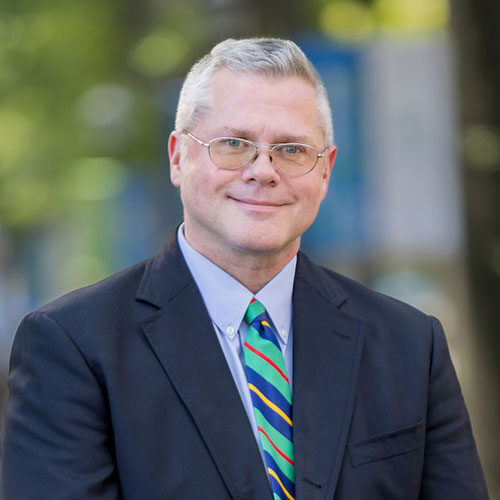
“Our adult learners bring significant professional and life experience into their studies. When students have agency and have to take action, they tend to become more invested in understanding the domain-specific knowledge and the responsibilities involved. Many of our adult learners are working professionals, parents, and people with a great deal of real-world experience. Instead of a rinse-and-repeat exercise where students are just demonstrating recall, this approach allows them to use their knowledge to create something. They become contributors and educators themselves, not just consumers of information.”
– Dermot Foley
Associate Director of Online Education, Center for Teaching and Learning
Lehman College, The City University of New York (CUNY)
Assessing and Enhancing Student Learning
Rather than concentrating solely on the completed Wikipedia contributions, assessment measures digital literacy skills alongside students’ developing understanding of how knowledge is created and shared with the public. Instructors look at process, growth over time, and how learners engage with research, collaboration, and the platform itself. “The professor is best positioned to assess student learning by observing how skills and writing evolve over time,” explains Foley. “The rubric is used as a formative evaluation tool that looks at technical writing, engagement with the Wikipedia system, and how students manage the process of contributing content.
“A key part of the process is working with the Wikipedian-in-Residence. For example, Richard advises faculty not to begin by creating entirely new pages. Instead, he encourages them to focus on ‘stubs’, or shorter entries that can be expanded and strengthened through additional research and writing. The rubric is not evaluating students directly, but evaluating faculty pedagogy. We provide guidance on how instructors might assess their students, but the evaluation framework itself is focused on how effectively faculty implement the assignment and support the learning process. The goal is formative evaluation and tracking improvement over time. If the process is working and students are successfully contributing to open outputs that can be shared through CUNY Commons, then the initiative is succeeding.”
For institutions considering a similar model, the starting point is less about adopting a single component and more about building a connected foundation of relationships, resources, and realistic timelines that can sustain the work over time. “Talk to your librarian first,” says Foley. “Librarians bring deep, interdisciplinary experience and already work closely with faculty across departments. Before going to faculty, think about who the key stakeholders are in your institution or community who might be interested and willing to engage. It’s also important to consider practical questions early on, like funding, timeframe, and existing support structures. The Wiki Education Foundation, for example, offers resources and remote instructional support for integrating Wikipedia into classrooms, which can be a valuable starting point.
“From there, it becomes a matter of building early support, identifying a few committed partners, and then realistically expanding outward. Faculty need time to plan, and these kinds of assignments have to be built into syllabi well in advance, they can’t be added mid-semester. Institutional buy-in and careful planning are essential. You need to understand your stakeholders, explore external support systems, and then thoughtfully design how you will introduce the initiative to faculty in a way that is both practical and sustainable.”