
The Resilient Campus:
Scaling Innovation and Governance in an AI-First Era
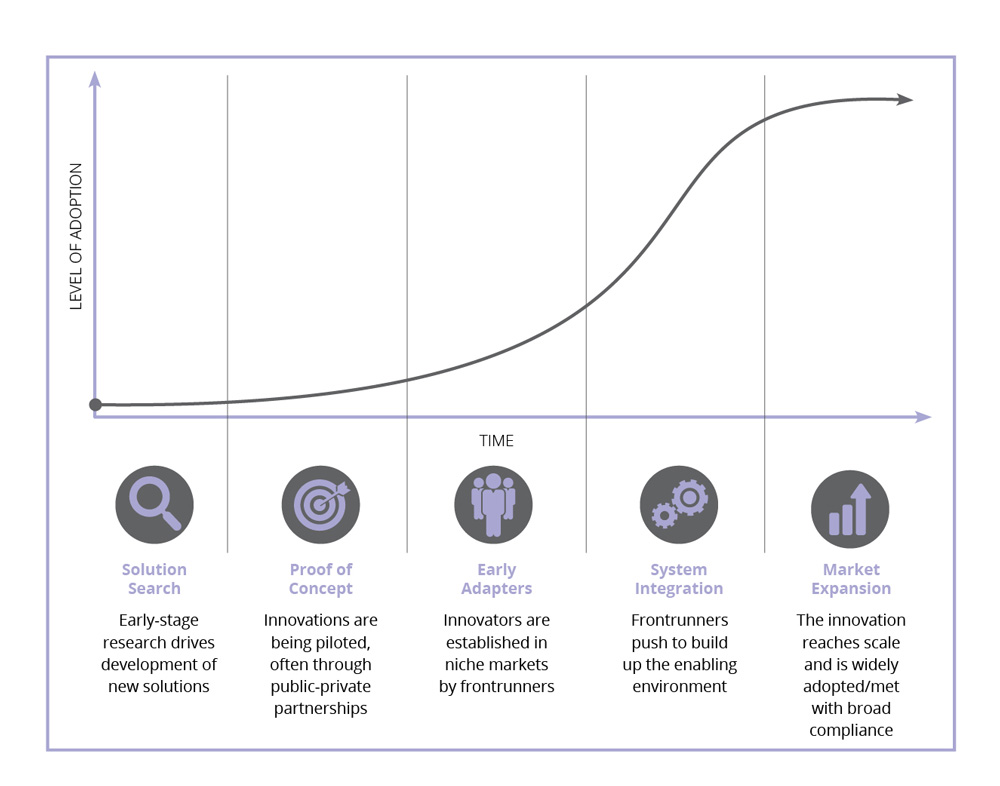
In recent years, higher education has experienced a steady diffusion of advanced technology across every layer of the institution. As colleges and universities explore how artificial intelligence fits into teaching, operations, research, and student engagement, many are discovering they’re still in the early stages of understanding what meaningful adoption actually looks like and what risks come with moving too quickly. “The conversation is less about whether institutions should embrace AI and more about understanding where they fall on the technology adoption curve,” says Chris Markham, President and Chief Executive Officer, Edge. “Some institutions are already experimenting with practical applications and governance models, while others are still trying to determine how deeply AI has permeated higher education, and what that means for their future competitiveness.”
That uncertainty is shaping a broader debate around governance. “While many institutions feel pressure to quickly establish AI policies and guardrails, that governance without a clear understanding of organizational readiness can create friction instead of progress,” says Markham. “The challenge is balancing protection against uncontrolled adoption with the flexibility needed to scale innovation responsibly. You first have to understand where you are on the technology adoption S-curve. Until you determine that, you could end up establishing policy, procedure, product, and people in a way that interferes with the adoption of the technology.”
“Too much attention on hypothetical future risks, without fully understanding current adoption realities, can distract institutions from building effective long-term strategies. The debate is moving rapidly toward forecasting consequences while devoting less attention to understanding the present level of adoption and institutional integration. Institutions need to understand where the technology is today, evaluate their current readiness, and explore how AI intersects with existing systems, policies, and business processes. Edge can help institutions navigate AI not as a standalone technology initiative, but as part of a broader organizational transformation that touches infrastructure, governance, accessibility, operations, and student success.”
– Christopher R. Markham, Ph. D.(c)
President and Chief Executive Officer
Edge

AI Acceleration through Collaboration
As institutions race to implement AI tools across departments, Markham says issues can arise when disconnected solutions emerge without a cohesive strategy. “Instead of creating fragmented adoption, the goal is to have homogeneity in the technology stack when it comes to a general-purpose technology like AI, as opposed to heterogeneity where tools are just popping up around the institution. Organizations must first understand where AI sits on the technology adoption curve before overcommitting to governance structures that could unintentionally slow innovation.”
Markham further clarifies by noting, “Moving too quickly on policy can create barriers to adoption, while moving too slowly can expose institutions to unnecessary risk. If an institution starts loading up policies too early, they could work against the return on investment; it’s important to hit the right frequency. The adoption journey will look different across higher education since institutional type, size, funding, culture, and technical maturity all influence how quickly AI capabilities can scale.”
“Research universities, community colleges, and trade schools are unlikely to move at the same pace, and there is no universal roadmap. Different sectors are going to be further along than others, whether it’s due to capital, culture, or institutional history and size. Collaboration is one of the most important accelerators for institutions trying to navigate the uncertainty surrounding AI adoption. Industry events and peer conversations help institutions benchmark their progress and identify where AI can most effectively support student success, operations, and research initiatives. Sharing knowledge helps institutions better understand where they are in the adoption process and ways AI can improve and inform decision-making, whether across the student lifecycle or within research initiatives.”
Improving Decision-Making and Productivity
While concerns around AI in higher education often focus on disruption, Markham says the technology is following a familiar historical pattern shared by every major general-purpose technology before it. “A general-purpose technology like AI follows the same historical patterns where early phases of diffusion are characterized by uneven adoption, ambiguous macroeconomic indicators, and delayed productivity effects. When we study AI, we also study the Internet, learning management systems (LMS), enterprise resource planning (ERP), and customer relationship management (CRM) platforms, as well as electricity, automobiles, railroads, and the airline industry.”
Understanding AI begins with recognizing what makes this technology a true general-purpose technology, or GPT. “Like the Internet, AI is not a single-use tool but a foundational capability that can transform virtually every aspect of an institution’s operations,” explains Markham. “As general-purpose technology, AI is in the same category as transformative innovations that reshaped entire economies. The internet age digitized work that used to be manual and physical. Higher education once relied on file cabinets, paper records, and manual processes. Technologies like ERP, CRM, and LMS platforms shifted that information into digital systems and made it broadly distributable.”
“That transformation dramatically improved access to information and operational efficiency, but much of the work still depended on humans manually processing and interpreting data,” continues Markham. “AI represents a different phase of technological evolution—one where the primary value shifts from digitization to intelligent decision-making. The difference between that era and where we are now is that the primary and secondary contributions invert. With artificial intelligence, the primary contribution is faster and higher-quality decision-making with fewer errors.”
As AI accelerates workflows and reduces inefficiencies, institutions gain the ability to operate at a scale and speed that previous generations of technology could not achieve. “As decision-making becomes faster and more accurate, operational efficiency improves,” says Markham. “AI is a legitimate general-purpose technology that has the potential to improve productivity across industries and the global economy, including higher education, when paired with the right data, governance, workflows, and institutional capacity.”

“Instead of creating fragmented adoption, the goal is to have homogeneity in the technology stack when it comes to a general-purpose technology like AI, as opposed to heterogeneity where tools are just popping up around the institution. Organizations must first understand where AI sits on the technology adoption curve before overcommitting to governance structures that could unintentionally slow innovation. Moving too quickly on policy can create barriers to adoption, while moving too slowly can expose institutions to unnecessary risk. If an institution starts loading up policies too early, they could work against the return on investment; it’s important to hit the right frequency. The adoption journey will look different across higher education since institutional type, size, funding, culture, and technical maturity all influence how quickly AI capabilities can scale.”
– Christopher R. Markham, Ph. D.(c)
President and Chief Executive Officer
Edge
Balancing Governance and Innovation
As leaders debate whether AI represents a fundamentally different level of disruption than previous technologies, the larger challenge may be resisting the urge to overstate or prematurely define its long-term impact before the evidence fully exists. “We don’t know yet how disruptive AI will ultimately be,” says Markham. “That’s important to acknowledge because premature decision-making, policy, and speculation are often built on fear rather than evidence. Looking back at the history of general-purpose technologies, nearly every transformational innovation initially sparked anxiety before delivering widespread economic and societal gains. However, every major GPT led to better decision-making, improved quality of life, and even improvements in broader measures like the Human Development Index.”
Many believe AI represents the next chapter in that ongoing technological evolution. Like the rise of the Internet in the 1990s, AI is accelerating the flow of information and reshaping traditional institutional models in ways that will be difficult to resist. “When the World Wide Web emerged, it fundamentally changed industries, politics, and the flow of information,” shares Markham. “History doesn’t repeat itself, but it sure does rhyme. Rather than resisting that transformation, higher education leaders should focus on designing institutions that can responsibly adapt to it and position themselves to benefit from the shift. Institutions have an opportunity to thoughtfully design for AI in ways that enhance productivity and decision-making.”
When building AI strategies and governance frameworks, institutions must make policy decisions that are grounded in a realistic understanding of where the technology sits on the adoption curve. “Policy errors can arise not only from ideological disagreement about artificial intelligence, but from inaccurate assumptions regarding technological maturity. The stage of diffusion of AI must be reasonably and empirically understood before claims regarding labor displacement, productivity stagnation, or urgent structural reform can be responsibly advanced.”
That balance between innovation and governance becomes especially important during the early phases of adoption, when institutions are still experimenting with use cases and long-term impacts remain difficult to measure. “Moving too aggressively with restrictive policies at the federal, state, or institutional level can create friction that limits innovation before institutions fully understand AI’s capabilities,” explains Markham. “When you look back at public policy development, the problems that emerged often had less to do with technology and more to do with policy timing and execution. The issue was whether institutions and governments invested in retraining, workforce development, and helping people transition alongside the technology.”
For higher education leaders, that means governance cannot exist separately from institutional strategy. AI policies must evolve alongside institutional readiness, operational goals, and workforce development efforts if institutions hope to fully realize the technology’s benefits. “There’s no question that structural change and labor disruption can occur with transformational technologies,” says Markham. “But history shows those challenges can be managed when institutions are willing to invest in adaptation, retraining, and long-term strategic planning alongside the technology itself.”
“For higher education leaders, that means governance cannot exist separately from institutional strategy. AI policies must evolve alongside institutional readiness, operational goals, and workforce development efforts if institutions hope to fully realize the technology’s benefits. There’s no question that structural change and labor disruption can occur with transformational technologies. But history shows those challenges can be managed when institutions are willing to invest in adaptation, retraining, and long-term strategic planning alongside the technology itself.”
– Christopher R. Markham, Ph. D.(c)
President and Chief Executive Officer
Edge

 Integrating Compliance into AI Adoption
To help higher education institutions navigate AI adoption, organizations like Edge are serving as a bridge between innovation, governance, and collaboration. “Since Edge is positioned between the public and private sectors, we can help institutions share knowledge, evaluate emerging technologies, and align strategy with implementation,” shares Markham. “We convene thought leadership between public and private entities; combining people, process, and product. As a network service provider, we provide connective tissue across the state and beyond that contributes to the continuation of adoption and helps institutions realize return on investment from their AI initiatives.”
That role becomes even more important as institutions balance AI adoption with growing compliance and accessibility requirements. “From digital accessibility mandates to student data privacy protections, institutions are being asked to integrate AI into environments already shaped by complex regulatory obligations,” explains Markham. “The Family Educational Rights and Privacy Act (FERPA), personally identifiable information, and student privacy are among the controls that need to be discussed, evaluated, and implemented as part of institutional AI integration.”
At the same time, compliance should not be viewed as a barrier to innovation. “Too much attention on hypothetical future risks, without fully understanding current adoption realities, can distract institutions from building effective long-term strategies,” says Markham. “The debate is moving rapidly toward forecasting consequences while devoting less attention to understanding the present level of adoption and institutional integration. Institutions need to understand where the technology is today, evaluate their current readiness, and explore how AI intersects with existing systems, policies, and business processes. Edge can help institutions navigate AI not as a standalone technology initiative, but as part of a broader organizational transformation that touches infrastructure, governance, accessibility, operations, and student success.”
Modernizing Academic Operations
Modernizing academic operations looks different across institutions and can depend on several factors. “There are common systems, but institutions differ in their operational models, academic missions, and student populations,” explains Markham. “Effective modernization is not about applying a single model across higher education. You must align technology and process to each institution’s unique structure and priorities. Within that broader framework, academic administrative operations and the core academic functions of teaching and research require a different approach when integrating AI.”
 Administrative modernization relies heavily on operational stakeholders who understand institutional data, workflows, and compliance requirements, while teaching and research require close collaboration with faculty experts. “Successful modernization will depend on inclusive, structured collaboration rather than isolated decision-making,” says Markham. “Effective information systems architecture cannot be built through exclusion or favoritism; it must be inclusive, structured, and grounded in how the institution actually operates.”
A resilient campus in an AI-first era is defined by how well it can ground its decisions in a clear, evidence-based understanding of where artificial intelligence sits in its adoption lifecycle. Without that foundation, efforts to interpret productivity, anticipate impact, or design policy responses remain limited in their effectiveness. “The resilient campus is one that addresses a central problem, and that is the absence of a rigorous empirical framework for determining where AI lies along the technology adoption S-curve,” says Markham. “Without that foundational understanding, efforts to interpret productivity trajectories, assess institutional impact, or design policy responses remain inherently constrained.”
By laying the groundwork for broader AI adoption, institutions can build a stronger understanding of how AI works in practice and create a more reliable foundation for future policies and decision-making. “Establishing the foundation for AI diffusion is a necessary first step for enabling a resilient campus,” explains Markham. “This allows institutions to be more accurate and responsible in their analysis of broader impacts and institutional implications, and it strengthens the evidentiary foundation upon which future AI policy can be built. An AI-ready campus is one with an enterprise information systems architecture, a clear understanding of where its data resides, a comprehensive data dictionary, and a technology stack that is increasingly cohesive rather than fragmented. There is a cultural and strategic shift in how institutions view technology itself, not as a cost center or support function, but as a core investment in institutional capability and long-term performance. Resilience is defined by maturity and the ability to integrate data, systems, and governance into a structure that evolves in step with technological change and will help strengthen institutional effectiveness for years to come.”
To learn more about building your institution’s AI-powered future, visit njedge.net/solutions/ai.