
STRONGER TOGETHER:
How Edge's Affinity Groups are Building the Communities Higher Education Leaders Need
There’s a particular kind of conversation that only happens when the right people are in the same room. Not the polished, on-the-record kind—the honest kind. The kind where a CIO admits what isn’t working yet, or a provost surfaces a challenge that doesn’t have a clean answer. That kind of conversation is the animating force behind Edge’s Affinity Groups, and according to Adam Scarzafava, Vice President of Marketing, Business Development, and EdgeEvents, it’s also exactly what Edge is designed to make possible.
“The real purpose of these things is for them to be able to share honestly from peer to peer the challenges that they’re having, the opportunities they’re seeing, maybe some things that are working or are not working,” says Scarzafava. “We get out of the way and let them really do their thing.”
That philosophy—convene, then step back—is at the heart of three Affinity Groups that now anchor the EdgeCon calendar: the long-established CIO Affinity Group, the growing Provost Affinity Group, and the brand-new CFO Affinity Group, launching for the first time at EdgeCon Autumn 2026 at Montclair State University.
The CIO Affinity Group: A Community With Deep Roots
The CIO group has the longest history of the three. Before the pandemic, Edge hosted a CIO Community of Practice—a structured but informal gathering that built real collegial ties among technology leaders across New Jersey. When COVID arrived, those in-person rhythms stopped, though the underlying community didn’t disappear entirely. Scott Huston, CIO and adjunct faculty at Stockton University, kept a virtual thread alive during the hiatus, convening a group of CIOs online with a regularity that maintained the connective tissue until it was safe to meet again.
When Edge relaunched in-person events with the new EdgeCon strategy—three conferences per year, each hosted at a different member institution—leadership saw an opportunity. The Affinity Group was reborn as a pre-conference gathering tied directly to the EdgeCon calendar, giving CIOs a dedicated in-person forum three times a year, with Huston’s virtual meetings continuing in between.
The format is deliberately light on structure. Edge might invite a speaker if the group requests a specific topic, but more often, the meeting belongs entirely to the attendees. Edge steps out. The doors close. And the conversation begins.
“They know that when they get there, there are going to be a million things that come up,” says Scarzafava. “They can raise their hand, they can talk about the problems that they’re having, and they can figure out how to support each other in really open and honest ways just amongst their direct peers.”
Facilitating that experience takes some careful choreography. The CIO of each host institution is invited to help lead the session, while a core group of community champions provides continuity as EdgeCon moves from campus to campus. Gamin Bartle, CIO at William Paterson University, has become one of those anchors. Bartle, who was recognized with Edge’s Distinguished Service Award for Educational Technology in 2019 for her work co-chairing the Educational and Emerging Technologies Community of Practice, brings both institutional knowledge and a perspective shaped by her roots on the academic side of higher education. She and Huston have become the kind of consistent voices that make a new CIO stepping into a host role feel supported rather than stranded.
Attendance typically runs between 25 and 30 participants, and the group has grown well beyond its New Jersey origins. CIOs from Pennsylvania, Delaware, New York, Virginia, Ohio, Kentucky, and even farther afield have found their way to the table.
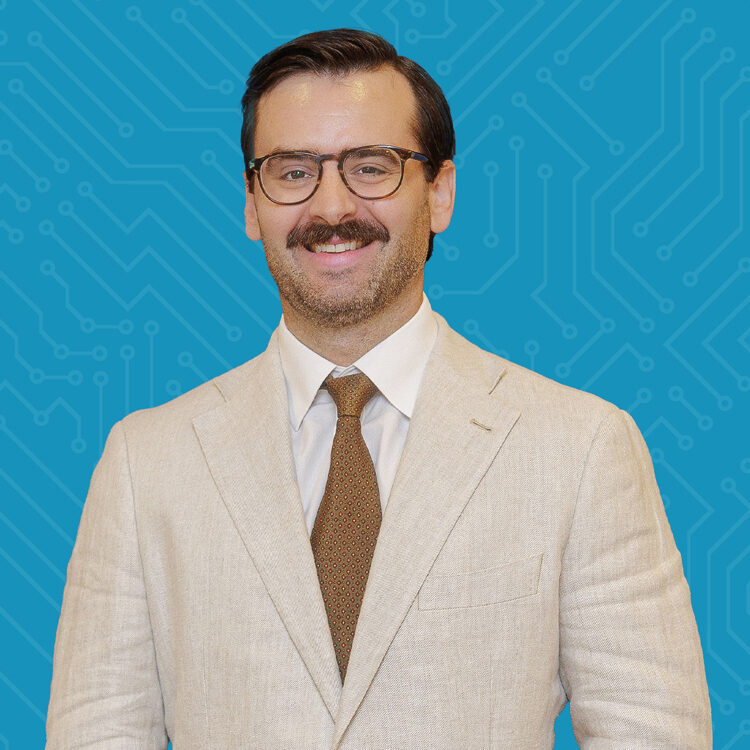
“That ability to reach out and bring more people into the community and make the community stronger is really at the heart of why we do it. To see somebody from Ohio or Kentucky or Florida look at what we’re doing and say, ‘There’s value there. I want to be a part of that community’ — that tells me something is going right.”
– Adam Scarzafava
Vice President of Marketing, Business Development, and EdgeEvents
Edge
The Provost Affinity Group: Building Momentum
The Provost Affinity Group grew out of a simple observation: the impact of technology on higher education had long since crossed the boundary of the IT office. AI, digital accessibility, instructional design, student success platforms, and retention strategy were all landing in the provost’s office with increasing weight. It made sense to give provosts the same kind of peer forum that had proven so valuable for CIOs.
The group has now met at three consecutive EdgeCon events, and while it’s still building the kind of gravitational pull the CIO group has developed over years, the early signs are encouraging. A handful of provosts have shown up consistently, bringing the kind of early-adopter energy that shapes what a community becomes. David S. Birdsell, Ph.D., Provost and Senior Vice President for Academic Affairs at Kean University, is one of those leaders. Birdsell, who has been a driving force behind Kean’s R2 Carnegie research designation and champions the integration of AI into teaching and curriculum, has been a regular presence and a collaborative partner for Edge as the group finds its footing.
One area where the Provost Affinity Group intentionally differs from the CIO model is structure. CIOs, who have years of shared experience getting together, tend to thrive in a more free-flowing format. Provosts, for whom this kind of peer forum is newer territory, benefit from a more deliberate agenda. Edge is working with the provosts who have become regulars to identify the topics that matter most—AI governance, enrollment pressure, technology’s role in student success—and build meeting agendas that make the value proposition clear before anyone walks in the door.
“They have to have that confidence that it’s going to be worth their time,” Scarzafava says. “There are so many demands on the provost office these days, not to mention the giant open-ended question that AI represents for everyone in those roles. If they’re going to spend any time off campus, they need to know it’s valuable.”
The CFO Affinity Group: A New Conversation Begins
This fall, a third group joins the EdgeCon gathering ritual. The CFO Affinity Group launches for the first time at EdgeCon Autumn 2026 at Montclair State University, with Benjamin C. Durant I, COO and Senior Vice President for Finance and Administration at Montclair State, serving as its inaugural facilitating leader.
Durant is a fitting partner for the launch. With more than 25 years of experience spanning higher education and municipal government, he oversees a $600 million-plus operating budget and provides executive leadership across finance, human resources, information technology, facilities, and more. His portfolio makes him exactly the kind of institutional leader who understands how financial strategy intersects with every other dimension of campus operations, including the technology investments and operational questions that Edge is built to address.
Like the Provost Affinity Group in its early phases, the CFO group will launch with structured agendas and clear topic focus, giving attendees reason to come prepared and confidence that their time will be well spent. Edge is approaching the CFO community with the same intentionality it brought to the provosts: listening first, building the agenda from what CFOs themselves say they want to talk about, and then creating the conditions for a genuinely closed-door, peer-to-peer experience.
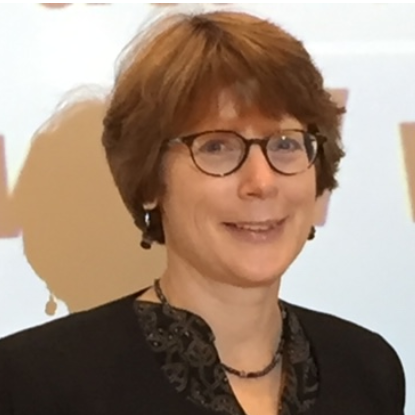
“The Edge CIO Affinity Group meetings are fundamental to my success as CIO at William Paterson University. Having a dedicated place and time to discuss shared issues and challenges in a safe and confidential space provides a number of benefits, such as hearing about my colleagues’ solutions, brainstorming with other CIOs, and a feeling of camaraderie that deepens over time. These meetings are bright spots in my schedule!”
– Gamin Bartle
CIO
William Paterson University
The CFO Affinity Group: A New Conversation Begins
This fall, a third group joins the EdgeCon gathering ritual. The CFO Affinity Group launches for the first time at EdgeCon Autumn 2026 at Montclair State University, with Benjamin C. Durant I, COO and Senior Vice President for Finance and Administration at Montclair State, serving as its inaugural facilitating leader.
Durant is a fitting partner for the launch. With more than 25 years of experience spanning higher education and municipal government, he oversees a $600 million-plus operating budget and provides executive leadership across finance, human resources, information technology, facilities, and more. His portfolio makes him exactly the kind of institutional leader who understands how financial strategy intersects with every other dimension of campus operations, including the technology investments and operational questions that Edge is built to address.
Like the Provost Affinity Group in its early phases, the CFO group will launch with structured agendas and clear topic focus, giving attendees reason to come prepared and confidence that their time will be well spent. Edge is approaching the CFO community with the same intentionality it brought to the provosts: listening first, building the agenda from what CFOs themselves say they want to talk about, and then creating the conditions for a genuinely closed-door, peer-to-peer experience.
Beyond the Meeting: Where Conversations Go Next
One of the design choices that makes the Affinity Groups particularly effective is their placement on the EdgeCon calendar: the evening before the main conference. That timing isn’t incidental. After two hours of structured peer dialogue, attendees flow into the EdgeCon Leadership Reception, which is a more social gathering that draws CIOs, provosts, cabinet members, and institutional presidents together in the same room.
What starts as a CIO conversation about AI governance can evolve, at the reception, into a cross-institutional dialogue that brings in a provost’s perspective on curriculum, or a CFO’s view on budget constraints. The formal meeting hands off to an informal one. And the informal one sometimes plants the seed of a collaboration that unfolds over the following months.
“Whenever you can get more of those people with different perspectives and different priorities in the room together and start that dialogue, that just makes them that much stronger,” Scarzafava says. “That’s what we’re here to do from the events perspective.”
The in-person dimension matters, too, in ways that are hard to replicate online. People slow down. They linger after a session. A hallway conversation becomes a follow-up call. A question raised in the group finds a new answer when someone corners a colleague by the coffee station. Edge has learned to trust those moments, and to structure its events so there’s room for them to happen.
An Invitation
The Affinity Groups are open to CIOs, provosts, and CFOs, and their teams at Edge member institutions, as well as higher education and government technology leaders across the region. Edge reaches out proactively to leaders across the Northeast and beyond, and word of mouth has carried the CIO group’s reputation to institutions in Ohio, Kentucky, Florida, and further.
The message, ultimately, is a simple one: you don’t have to figure this out alone. The problems are shared. The knowledge is distributed. And Edge is ready to help put everyone in the same room.
For more information on Edge’s Affinity Groups or to register for EdgeCon Autumn 2026 at Montclair State University, visit njedge.net and/or njedge.net/event/edgecon-autumn-2026/.