
Building the Future of Sussex County Community College on a Data-Driven Foundation
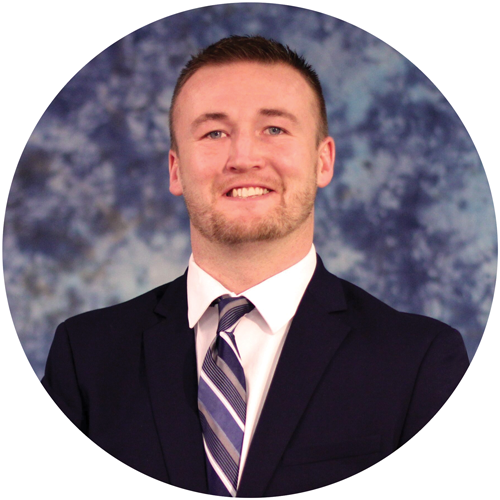
Sussex County Community College (SCCC) is entering a new chapter of leadership, as the Board of Trustees unanimously selected Dr. Cory Homer to serve as its next President. With over a decade of experience at SCCC and after guiding the institution during his tenure as Interim President since January 2025, Dr. Homer will bring student-centered leadership and a drive to elevate the College’s reputation for access and excellence. “My first job after graduate school was at SCCC 12 years ago, where I came in with a background in clinical psychology and a strong focus on statistics,” shares Dr. Homer. “These two worlds may not appear to blend at first, but they complement each other remarkably well. In my early role in institutional research, I learned how data could be used across the institution, and I gradually took on more opportunities, including exploring athletics, counseling, admissions, enrollment management, distance learning, accreditation, and teaching. When the chance to step into a leadership role came along, it was easy to say yes, because I know this institution inside and out.”
In addition to his dedication to education, Homer has always been actively involved in his community, carrying forward a family tradition of service. “My dad is a volunteer firefighter, and he instilled in me a commitment to giving back,” shares Homer. “I’m the Vice President and dive captain for the Westfall Township Volunteer Fire Department and serve as the Mayor of the Borough of Matamoras. I love the open-access mission of this College, which makes serving our students and community even more meaningful.”
“None of this would have been possible without using the data effectively. Institutions that have the maturity to leverage data in this way will identify the real opportunities, while those that don’t risk being left behind. I can’t emphasize the importance of data culture. In some institutions, for example, application counts are only shared with admissions, which limits perspective. By contrast, at our institution, open access to those applications allows us to have meaningful conversations across departments, whether it’s with criminal justice faculty or other supervisors, about trends, challenges, and how we can respond through marketing, relationships, and other strategies. That collaborative approach makes all the difference.”
– Dr. Corey
President
SCCC
SCCC’s Data-Informed Journey
SCCC has been steadily building a culture of data-driven decision-making, transforming how the institution uses information to guide its strategy and support student success. Dr. Homer credits the College’s early progress to collaborative partnerships, particularly with key leaders in IT and institutional research. “When I first came into oversight of Institutional Research, I realized how critical our IT department was,” he recalls. “Judy Lovas, Chief Information Officer, and Dave Litteral, IT Director and mastermind behind our business intelligence platform, were essential in shaping the path forward.”
At the start, much of the College’s data was stored in fragmented “shoebox” systems, including Excel spreadsheets and individual departmental files. To address this, SCCC undertook a cleanup process, consolidating and standardizing information into a central system using Cognos, its business intelligence platform. The goal was to make data accessible, useful, and reliable for everyone.
Dr. Homer was appointed as the lead of the Strategic Enrollment Group (SEG). Through weekly group meetings, the SEG team found that technical work was only part of the equation. Creating reports and tools was one thing. The bigger challenge for SCCC was building a culture where departments felt comfortable sharing data widely. The formation of SEG allowed admissions, academic affairs, financial aid, bursar, registrar, marketing, and student success departments to begin collaborating around shared metrics. That was when SCCC started seeing data drive meaningful decisions. This early work laid the foundation for a culture in which data informs nearly every aspect of the College, from enrollment strategies to student outcomes, and positions SCCC as a leader in evidence-based decision-making.
SCCC’s approach to data-driven insight is built on six key areas that together form the foundation for informed, strategic action across the College.

Course Placement: SCCC uses a “multiple measures approach” to determine the appropriate course-level (remedial or college-level) for students. This data includes high school transcripts and scores from the Accuplacer, SAT, and/or ACT, combined with input from academic advisors.

Proactive Academic Advising and Intervention: Advisors use student data to create personalized educational plans and provide mentorship. Faculty and staff regularly track student progress to identify those who may be struggling and implement early interventions to ensure they have the necessary support.

Strategic Planning and Institutional Effectiveness: The College uses data for internal environmental scans and to inform its Strategic Plan. This process involves tracking data on retention and completion rates to measure progress toward goals and adjust practices accordingly.

Benchmarking and Peer Analysis: SCCC participates in the Integrated Postsecondary Education Data System (IPEDS) surveys, which enable the institution to compare its performance metrics (such as enrollment trends, degrees awarded, and time to completion) with those of similar institutions.

Identifying and Addressing Student Needs: SCCC uses both quantitative and qualitative data to identify barriers to student success. For example, data from a “RealCollege” survey on food insecurity helped the College join a state-wide initiative to address this issue.

Program Development: Data insights help the College in developing new programs that create direct pathways for students to launch their careers, ensuring offerings meet current needs.
Building on this foundation, Dr. Homer emphasizes that data-driven decision-making goes beyond collection; it requires tying measurable outcomes to every goal. “Coming into academia as a first-generation college student, I found it frustrating that strategic planning often became a long, drawn-out process that ended up sitting on a shelf. One of my priorities has been to ensure that every area of the Strategic Plan is tied to strong, actionable metrics. We have metrics that are tied to each area, and our Strategic Enrollment Group really got this off the ground. I recently found an old agenda from 2023 that illustrates the structured approach: every Tuesday, 20 to 30 attendees—including faculty, staff, and administrators—gathered to review a comprehensive snapshot of enrollment data.
“Each morning, distribution groups received 20 to 30 reports covering everything from inquiries and applications to credits and headcount. You always have that information at your fingertips, but every Tuesday we circle back to see where that snapshot stands in real time. We’d review where we’re strong, where we need help, and how each academic program is performing against its recruitment targets. These weekly discussions yielded actionable insights, including gaps between applications and actual enrollments. We could see, for example, that we were minus 3 in enrollment but had 37 applications, indicating a clear application-to-enrollment gap. Those discussions happen openly among everyone, which fosters a shared understanding and collective problem-solving process.”
The process also includes strategic operational decisions. “Using Cognos, the College color-coded fill rates to indicate where intervention was needed,” continues Homer. “Green means good, yellow means start thinking about adding another section, and orange indicates a course might be canceled due to low enrollment. This helps advisors and faculty make timely decisions about where to place students or whether to adjust course offerings. By bringing together faculty, staff, deans, and administrators in these structured, evidence-based conversations, SCCC ensures that information isn’t just collected, but guides everyday decisions, strengthens collaboration, and aligns with the college’s broader strategic mission.”
Fostering a Culture of Continuous Improvement
Using data-driven insight, SCCC has cultivated a culture of continuous improvement. “One of the biggest challenges is striking a balance between ‘data overload’ and delivering information that is genuinely useful,” shares Homer. “If we make employees go find the data themselves, it becomes a task. When the information is delivered to them every morning, they are far more likely to use it and hold one another accountable. Sharing data widely across departments ensures transparency and allows departments to collaborate, making it easier for teams to act strategically.”
SCCC’s approach also emphasizes practical application. For example, the Marketing Department uses weekly enrollment data to respond in real time. “When we notice a program like Exercise Science has a decrease in enrollment, our marketing director can develop and deploy a social media campaign within hours,” explains Homer. “There is no outside vendor or long approval process; instead, decisions happen immediately. This is invaluable for enrollment and student engagement. By integrating data into daily workflows and empowering staff to act on insights, we’ve built a system that not only tracks performance but actively drives improvement and creates a responsive culture across the institution. As a small rural community college, we don’t have the large budgets that other institutions do. While that might sound like a limitation, it’s actually a strength, because it pushes us to be innovative and make the most of the resources we do have at our disposal.”
Using Data to Identify New Opportunities
From budget constraints and shifting demographics to evolving technology and growing competition, higher education is undergoing an unprecedented transformation. For small, rural institutions, these pressures can feel especially acute, but they can also spark innovation. “Data is key to everything,” says Homer. “Many institutions are not yet mature in their use of data, and without it, human factors can distract from the mission and core priorities. The use of data has been grounding for us, and we’re able to follow trends and look for opportunities. For instance, when our data shows a significant increase in students from a local high school, we might reach out to the superintendent or guidance team to strengthen that relationship. On the other hand, if a school isn’t sending as many students as we would hope, it prompts us to reevaluate and consider how we can better support that partnership.
“When we’re able to do that, especially being a rural institution, it’s helpful to use that as a grounding point. At the same time, our administration ensures that external pressures remain peripheral and do not impact the core of what we do. There are also significant opportunities in using data, particularly around market share. For example, we’ve identified educational deserts, such as in Pike County, Pennsylvania, where the nearest community college is a 40-minute drive away. In response, we’re expanding our classes, essentially moving from New Jersey into Pennsylvania, because we already have about 200 students attending from that area.”
This move serves a dual purpose: it allows SCCC to expand its mission of open access for students, and helps fill a local gap, supporting the community and economy. “None of this would have been possible without using the data effectively,” states Homer. “Institutions that have the maturity to leverage data in this way will identify the real opportunities, while those that don’t risk being left behind. I can’t emphasize the importance of data culture. In some institutions, for example, application counts are only shared with admissions, which limits perspective. By contrast, at our institution, open access to those applications allows us to have meaningful conversations across departments, whether it’s with criminal justice faculty or other supervisors, about trends, challenges, and how we can respond through marketing, relationships, and other strategies. That collaborative approach makes all the difference.”
Upon first moving into his role, Homer says he scanned the county’s environment to identify opportunities. “I’m a strong believer that ideas are only valuable if you can act on them. In today’s context, building partnerships and relationships, especially with renewed focus and energy, is critical for the survival of small rural community colleges. To that end, we identified all 67 registered nonprofits in the county and scheduled intentional outreach for each. We aimed to meet with every organization to explore potential collaborations. This approach serves two purposes: first, it helps the College stay informed about what’s happening in the local community; second, it educates partners about our initiatives. For example, we shared with the Sheriff’s Office that 200 students are enrolled in our criminal justice program each semester—information they may not have previously known.
“We track all of this systematically, including meetings completed, scheduled, inquiries sent, and new contacts, because relationships and partnerships are the future. With funding for education and nonprofits increasingly limited, a shared vision with local organizations opens the door to meaningful impact. One example is Benny’s Bodega, which provides meals to over 900 families each month but has struggled to find volunteers. Our students were eager to help, so we coordinated volunteers and collaborated on meal ideas, including through our culinary program. For small rural community colleges, these strong community relationships are more important than ever, allowing the College’s mission to be shared widely and effectively.”
Turning Challenges Into Opportunities
Looking ahead, Homer is optimistic about the opportunities on the horizon and the ways SCCC, together with the administration, faculty, and staff, can make a meaningful difference on campus and beyond. “We have some strategic, large-scale initiatives coming in the next few years that will have a real positive impact on the community and the region,” shares Homer. “I’m also excited about our ongoing partnerships with local law enforcement and the fire service. For example, we oversee the Public Safety Training Academy, and we’ve expanded programming for the fire service. We’re building an outdoor shooting range on campus for law enforcement certification, and we’re renovating an old chapel to serve as the home of the county’s film commission. This allows us to attract film productions while providing our culinary, film studies, or broadcasting students with excellent internship opportunities. We are looking to expand our health care programs to provide much-needed access to quality care, training, and career opportunities for our students and the community.
“These are challenging times for education, but we must remember that challenges create opportunities, and I’m energized by the possibilities ahead. If you can use data as a foundation for navigating these challenges, it becomes a win-win for everyone involved.”
Creating reports and tools was one thing. The bigger challenge for SCCC was building a culture where departments felt comfortable sharing data widely. The formation of SEG allowed admissions, academic affairs, financial aid, bursar, registrar, marketing, and student success departments to begin collaborating around shared metrics. That was when SCCC started seeing data drive meaningful decisions. This early work laid the foundation for a culture in which data informs nearly every aspect of the College, from enrollment strategies to student outcomes, and positions SCCC as a leader in evidence-based decision-making.