
Redefining Fraud Prevention in Higher Education
As fraud in higher education grows increasingly sophisticated, institutions across the country are grappling with how to detect, prevent, and respond to threats that are evolving faster than traditional systems can address. For many, the challenge is not only identifying the problem, but also knowing where to start. Thomas Edison State University (TESU) decided to confront the issue head on, embarking on a deliberate process to select a solution, navigate implementation, and build a sustainable framework for the future. Their experience offers a roadmap for institutions at every stage of the journey, from the earliest warning signs to practical next steps.
As a pioneer in distance education and degree completion, TESU has long served adult learners looking to finish their degrees. Christine Carter, Director of Graduate Admissions & Recruitment and Director of Enrollment Technology at TESU, was brought in initially to implement a Customer Relationship Management (CRM) system, and that foundation shaped everything that followed: optimizing application processes and providing technical support for admissions counselors, recruiters, and students, with the goal of making the digital experience as seamless and student friendly as possible for a distance education audience.
Having witnessed nearly two decades of transformation in higher education, Carter has seen both remarkable advancements and mounting challenges reshape the admissions landscape. “The technology that has become available has just been amazing, but keeping up with it is a challenge in itself. Institutions have to adopt these advancements quickly while still making sure the experience remains user friendly for both students and staff,” she said. Among the most significant shifts was a cultural change at TESU roughly eight years ago, when a new president came on board and the University became more recruitment focused. “We became more front-facing, and we knew we wanted to use a CRM product to become more recruitment focused,” Carter explains. “That decision was driven by both technological opportunity and the looming enrollment cliff, as well as growing competition in the distance education space. We were one of the first to create a distance learning environment, but following COVID, many institutions had to quickly join us in that space.”
Along with that expansion came a surge of new challenges, with fraud emerging as one of the most significant. “The level of student fraud to go after financial aid money has just been an incredibly large challenge,” states Carter. “Nobody has solved this issue — there is no real oversight for this yet. It is an arms race, with bad actors getting increasingly good at finding ways around your system. We can’t just check security off our list, it is constant.”
“Fraud detection often becomes overwhelming from a manual point of view — there is simply no way to keep up with the volume. Criminals know they can pump in data that makes it difficult for human beings to filter through. It is similar to a distributed denial of service attack, where you overwhelm a system with so many requests it cannot keep up. TESU began to pivot from being reactive to proactive, asking how they could put processes in place upfront that would let them do their normal job without always dealing with the volume of fraudulent activity coming in.”
– John Van Weeren
Vice President Higher Education
Voyatek

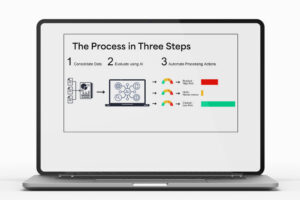 Standardizing Identity Verification
That awareness led TESU to seek out a solution, ultimately bringing them to a partnership with Voyatek. “About a year ago, we started noticing fraudulent behavior where students within our course space presenting the same AI generated content, weird patterns on our application data, and the financial aid office noticing strange activity,” Carter recalls. “We came together, started talking, and realized we had a fraud issue.” For a fully online institution, the stakes were high. “Almost all of our students are fully online, so how do we guarantee that the students coming to us are who they say they are, along with creating a secure and safe experience?”
That question prompted TESU to evaluate vendors with a clear vision of where identity verification should reside. “We decided we wanted it as part of our application process and a consistent experience for all students, not just flagging suspicious applicants, but making identity verification a standard step for everyone coming to TESU. We brought Voyatek a blueprint of what we needed and, while we didn’t have all the answers, we knew what we wanted to do and how we wanted it to work. We met in person, completed a business process map, and because we took that time upfront, implementation was very efficient.”
“After meeting, it was a six-week process to launch, which came down to a single day,” continues Carter. “Voyatek turned it on and we were live together, refining as we went. Since we had taken the time internally to set everything up the best way we knew how, it saved us a great deal of back and forth. We also brought on a temporary staff member to help redistribute the work across staff so that it would not be an overwhelming lift from the start, and that has continued to be beneficial.”
Voyatek, rooted in nearly two decades of experience helping higher education organizations make better use of their data, brings a distinct perspective to the challenges institutions such as TESU are navigating.. “Data is the biggest gap, and it has been an ongoing challenge for as long as I have been in this industry,” says John Van Weeren, Vice President Higher Education, Voyatek. “Leadership has strategic expectations, including growing enrollment, increasing retention, improving student success, but there is a significant data literacy gap. How do you take what is happening at an operational level and turn it into something usable for tracking whether change is actually being made?” That challenge drove Voyatek to build its student success analytics platform around a single, vertically integrated line of sight, ensuring the same data serves every level of the institution.
Beyond operational challenges, Van Weeren points to broader institutional risks that are often overlooked until it is too late. “One of the most obvious is reputational risk. The same criminals using scams to take money out of people’s pockets are using those same techniques with enrollment management staff and every other touch point where knowing someone’s identity matters. Institutions need to rethink policy and how data is going to be used. The ethos of collegiality and openness in higher ed now has to be tempered with a less trusting approach to how students are onboarded — and that is a significant cultural change.”
TESU’s journey, like many institutions, did not begin from a position of proactive planning. “Fraud detection often becomes overwhelming from a manual point of view — there is simply no way to keep up with the volume,” says Van Weeren. “Criminals know they can pump in data that makes it difficult for human beings to filter through. It is similar to a distributed denial of service attack, where you overwhelm a system with so many requests it cannot keep up. TESU began to pivot from being reactive to proactive, asking how they could put processes in place upfront that would let them do their normal job without always dealing with the volume of fraudulent activity coming in.”
Understanding the threat requires getting inside the minds of the fraudsters themselves. “A few years ago, fraud detection was a simpler problem, you could look at a list of applications and see they all came in within seconds of each other and know it was a bot,” explains Van Weeren. “Eventually most institutions put basic checks in place, and criminals just stepped up to get around them. That escalation is precisely why Voyatek built higher education specific markers into our platform. A commercial product built for banking is not going to work well for a non-traditional student, an international student, or a younger population without banking history or a credit record. The emergence of AI has added an entirely new dimension; there are incredibly realistic video injection bots that can simulate a real human being in a Zoom verification call. Any solution today has to go far beyond simple rules and use AI to look for much more sophisticated combinations of indicators. The early systems that are out there rely on an approach that does not work anymore. As fraud has evolved, the defenses against it have to become far more sophisticated as well.”
Designing Sophisticated Defenses
Carter and Voyatek shared TESU’s experience at EdgeCon Winter 2026 during the breakout session, Protecting Your Institution From Fraudulent Applications with Identity Verification. The presentation resonated widely, sparking conversations with institutions at various stages of addressing fraud. “We presented at EdgeCon and at a regional users group in New Jersey the week before, and we heard from a lot of schools as a result,” shares Carter. “Everyone is in a different place, and it has been interesting to hear which staff are involved at different schools. The fact that our department has owned this process for the University has made all the difference.”
 When asked about the practical challenges encountered during implementation, Carter was candid about the learning curve. “We went in knowing as much as we thought we knew, and quickly realized that our language and Voyatek’s language weren’t exactly the same. We were so focused on students who passed and students who failed, but there was a middle ground we hadn’t anticipated, with statuses coming back to our CRM that we hadn’t expected. We immediately saw bad actors finding ways around the identity verification, which brought in the background check component of the Voyatek product. Identity verification alone was not going to be enough. When a student submits their application, we wanted the verification text to go out as quickly as possible, but there was a lag at first. Voyatek modified it on their end and now it goes out within two to three minutes. They have become so familiar with how we work with students that they are able to personalize their feedback to how we operate. Our institution is unique with rolling admissions, where students start every day, and Voyatek has been able to modify the use of their system to best fit our needs. That has made all the difference.”

“Our number one concern was that enrollments would dip because students would push back, but that did not come to fruition at all. That was probably the biggest surprise we had. Enrollment numbers have remained stable, and feedback has been largely positive. The operational impact has been equally significant. Prior to implementation, the process was entirely manual, where staff reviewed every application against an internal rubric and counselors conducted Zoom calls to verify identity. Taking that away has been huge.”
– Christine Carter
Director of Graduate Admission & Recruitment and Enrollment Technology
TESU
Assessing Operational Impact
Since implementation, Carter says the measurable outcomes proved to be more positive than anticipated. “Our number one concern was that enrollments would dip because students would push back, but that did not come to fruition at all. That was probably the biggest surprise we had. Enrollment numbers have remained stable, and feedback has been largely positive. The operational impact has been equally significant. Prior to implementation, the process was entirely manual, where staff reviewed every application against an internal rubric and counselors conducted Zoom calls to verify identity. Taking that away has been huge.”
Van Weeren echoes the financial and operational impact. “We have a client who was spending more than a hundred hours a week across two people just screening applications during peak processing time. That has been reduced to minutes. Institutions are able to make a clear statement: this is what we are doing about fraud, and this is the measurable benefit. Transparency is essential, not just for compliance but for equity. Everybody is being processed the same way, and institutions have everything they need to defend against these increasingly sophisticated approaches to fraud in a way that is fair, consistent, and defensible.”
 Looking ahead, TESU is already considering expanding their use of Voyatek beyond admissions. “We are looking into expanding into other areas, including financial aid,” says Carter. “For institutions still in the early stages, just know it is going to be an ongoing process, it is not a problem to be solved with the flip of a switch. Fraud detection is an institutional commitment that requires continuous review and a coordinated effort across every department, now and into the future.”