
Technology Across the Student Lifecycle: Strategy, Process, and Transformation
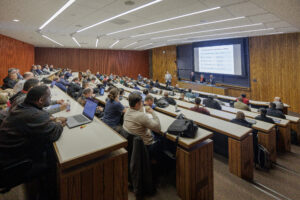
On January 15, 2026, EdgeCon Winter, hosted in partnership with Princeton University, convened higher education leaders and technology professionals for an intensive exploration of how technology, data analytics, and artificial intelligence are reshaping institutional operations and the student experience. The conference examined the growing impact of technology across every phase of the student lifecycle, from recruitment and enrollment to retention and career outcomes. Through a thought-provoking keynote panel and comprehensive breakout sessions, attendees explored strategic frameworks, practical implementations, and real-world case studies that demonstrated how institutions can leverage technology to enhance educational experiences, improve operational efficiency, and build long-term institutional resilience.







Combating Fraud in the Digital Age
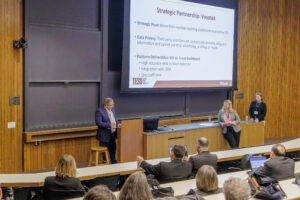
As institutions increasingly face sophisticated fraud attacks in the admissions process, Thomas Edison State University took decisive action to protect their community and maintain institutional integrity. In Protecting Your Institution From Fraudulent Applications with Identity Verification, Christine Carter, Director Graduate Admissions & Recruitment, Enrollment Technology, and Jeff Butera, Lead Analytics Consultant, Voyatek, shared their comprehensive approach to detecting and preventing admission fraud.
The presentation walked attendees through the institution's decision-making process, from recognizing the scale of the problem to selecting and implementing an identity verification solution. Carter and Butera discussed the practical challenges of preparing internal stakeholders and external constituents for new verification processes, as well as the critical support considerations that ensured a successful launch. Attendees gained insight into major considerations for any fraud detection solution, best practices for managing change across departments, and lessons learned that can help other institutions protect themselves from increasingly sophisticated fraud attempts.
Authentic Storytelling for Enrollment and Engagement
Manor College launched an innovative approach to student recruitment and retention through "The Nest," a dynamic podcast showcasing diverse alumni journeys. In From Blue Jays to Bright Futures: Hatching a Podcast for Enrollment & Engagement, Kelly Peiffer, MA, Vice President of Marketing Communications, and Anthony Machcinski, Director of Marketing, Content and Photography, shared the strategic development and behind-the-scenes execution of this storytelling initiative.
The session went beyond theory to offer a practical roadmap for creating impactful audio content. Peiffer and Machcinski covered the podcast's conceptualization, content strategy for identifying compelling alumni stories, production workflow leveraging campus resources and student involvement, and dissemination planning for maximum reach. They also shared key lessons learned, including unexpected challenges and effective solutions, along with preliminary metrics on prospective student engagement and current student feedback. Attendees gained actionable insights into developing storytelling strategies, engaging alumni as advocates, and utilizing podcasting as an innovative communication tool that strengthens recruitment efforts and cultivates lifelong connections with students.
“I appreciate these events and the Edge team that puts them together. They are always welcome opportunities to connect with colleagues and hear about important and innovative work being done across our institutions.”
– Jeff Berliner
Chief Information Officer
Institute for Advanced Study

Understanding the NSP Difference
Network Service Providers and commercial Internet Service Providers may appear similar, but they are fundamentally different in design, governance, and purpose. In Why NSPs Are Not ISPs: Architecture, Intent, and Outcomes, Christopher Henderson, Senior Network Engineer, drew on years of experience designing and operating large-scale enterprise networks to explain these critical distinctions.
Henderson explored how NSPs like EdgeNet are purpose-built to support teaching, research, healthcare, and public mission in ways that traditional ISPs cannot. The session examined NSP architectures that prioritize resilience, predictability, scalability, and long-term institutional outcomes through high-capacity fiber backbones, optical transport, and packet-based services that enable advanced research workflows and large-scale data movement. Attendees gained insight into why these design choices matter from both operational and strategic standpoints, and why understanding the distinction between NSPs and ISPs leads to better decisions about campus connectivity, digital strategy, and future-ready infrastructure.
AI Implementation Roundtable
Artificial intelligence is fundamentally transforming higher education operations and pedagogy, but implementation challenges vary widely across institutions. Implementing AI in Higher Education - A Roundtable brought together technology and academic leaders to explore current applications, emerging challenges, and future directions. Panelists John Bruggeman, Consulting CISO, CBTS; Chris Treib, CIO, Geneva College; Moe Rahman, Associate Vice President/CIO, Community College of Philadelphia; and Patricia Clay, MBA, Associate Vice President and Chief Information Officer, Hudson County Community College, shared diverse perspectives on AI adoption across different institutional contexts.
The roundtable examined how AI is reshaping teaching through personalized instruction and adaptive learning platforms, supporting faculty with analytics that identify learning gaps, and enabling administrators to employ predictive models for improved retention and resource allocation. The discussion highlighted both the opportunities and the complexities of implementing AI at scale, from policy development and training to measuring impact and managing risk. Participants engaged in an open dialogue about preparing students for an increasingly AI-driven world while maintaining the human elements central to higher education.
“It was a great first experience to have with this organization's conference.”
– Michael La Fountaine
Associate Dean
Seton Hall University

From Spend to Strategy: The Value Partnership
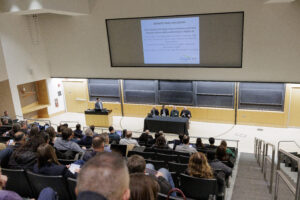
As financial pressure and complexity increase across higher education, institutions are reexamining what "value" truly means from their technology partnerships and investments. The keynote panel, From Spend to Strategy: How Institutions and Tech Partners Deliver Measurable Value in Higher Ed, brought together organizational leaders and technology partners to explore how value is created—or lost—across the technology lifecycle.
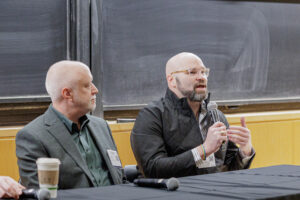
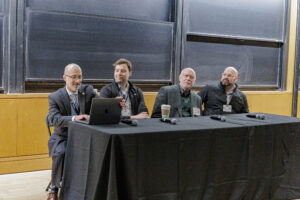
The discussion examined how expectations around ROI have evolved, what boards and senior leaders look for when assessing technology investments, and how institutional teams and vendors share responsibility for delivering measurable results. Designed for both executives and practitioners, the panel explored organizational and cultural factors that shape outcomes and practical ways front-line managers and staff can influence success. The conversation emphasized that success today is defined not by deployment alone, but by outcomes in student experience, operational capacity, risk reduction, and long-term institutional resilience.
Building AI-Powered Student Support Systems
Meeting students where they are—anytime, anywhere—is a growing challenge for institutions with limited advising resources. In Advancing Artificial Intelligence to Enhance Education and Learning Outcomes, Paul Wang, Director, Chair, and Professor, Morgan State University, introduced iNavigator, an innovative agentic AI application designed to provide 24/7 student advising and support.
The presentation demonstrated how Wang developed this system using Vertex-AI and Google Gemini models to create agents that provide localized departmental resources not available on general generative AI platforms like ChatGPT. Attendees learned how to develop and apply agentic AI models at their institutions using a Retrieval-Augmented Generation (RAG) pipeline to build Small Language Models that address specific departmental, school, or university needs. Wang emphasized that this approach extends beyond higher education to corporate and organizational applications, and generously made the code available on GitHub for free access to all attendees.
Strategic Alignment Before Technology Implementation
Organizations across higher education continually launch complex, high-stakes initiatives, but many fall short of expectations not because of poor execution, but because leadership teams were never fully aligned on why the initiative mattered. In WHY Before HOW: Aligning Strategic Initiatives to What Actually Matters, Dan Miller, AVP EdgeMarket and Solution Strategy, Edge, introduced Business Value Story™, an emerging strategy-to-execution alignment approach.
The framework helps organizations define and quantify the business value an initiative must deliver before determining how it will be implemented. Rather than starting with solutions, structures, or technologies, Business Value Story establishes a shared language of business value, translates strategy into specific and measurable business outcomes, and aligns cross-functional leaders around a common definition of success. Using real-world scenarios from higher education, Miller explored how institutions can reduce misalignment, improve decision-making, and accelerate execution across both technical and non-technical strategic efforts.


Conversational AI for Course Discovery
Complex course catalogs and enrollment data can overwhelm students, faculty, and advisors seeking quick answers to scheduling questions. In Ask the Course Catalog: Building a Grounded, Hallucination-Free AI for Course Discovery, Bharathwaj Vijayakumar, AVP Institutional Data & Analytics, and Jaress Loo, Director, Software Development, Rowan University, showcased Section Tally AI, a conversational agent that transforms how users interact with course information.
The presentation demonstrated how student information system data was modeled into a star schema, combining course catalog details, section schedules, enrollment counts, capacity, and instructor metadata into a unified semantic layer. This preparation allows the agent to reliably answer both lookup questions ("Which sections of college composition 1 are still open?") and aggregate questions ("How many courses are full this term in CS department?"). Vijayakumar and Loo explained how they designed the AI layer to remain grounded in data using few-shot prompting, curated examples, and controlled query patterns that prevent hallucinations. The session concluded with lessons learned, adoption strategies, and guidance for institutions seeking to move beyond static catalogs toward reliable, AI-powered course discovery at scale.
Cybersecurity for Everyone
Cyber risk extends far beyond IT departments—faculty, staff, and student-facing offices routinely face phishing, fraud, and increasingly convincing AI-enabled deception. In Cybersecurity Awareness: A Refresher and Best-Practices for Non-Security Personnel, Demetrios Roubos, Ed.D., M.S., CISSP, Information Security Officer, Stockton University, provided practical, university-relevant guidance designed for non-cybersecurity personnel.
This interactive refresher surveyed today's most common threat patterns and simple habits that prevent most incidents. Topics included spotting phishing and strengthening email security, online safety tips for parents and families, recognizing common scams such as elder fraud and fake job offers, detecting AI-generated content and deepfakes, and everyday protective tools like password managers and VPNs. Participants left with actionable checklists, reporting pathways, and a shared baseline of security behaviors that reduce risk across the university community.
“Best ROI of any conference I attend through the year.”
– Scott Huston
Vice President for Information Technology Services & CIO
Stockton University

Scaling Vendor Risk Management with AI
When 75% of Rowan University's VRM student analysts accepted internships with Lockheed Martin, the institution faced a sudden operational challenge. In VRM AI-Driven Compliance Playbooks: Scaling Vendor Risk Reviews with Human-in-the-Loop Assurance, Lou Belsito, Manager, Information Security Risk Management, and Mahmudul Siddiquee, Enterprise Application Architect, Software Development, shared how this challenge inspired the creation of the VRM AI-Driven Compliance Program.
At the heart of this solution is the VRM Unified Compliance Repository, a dynamic catalog of regulations, policies, standards, and procedures. Using AI, the team compares ServiceNow ticket data against this repository to generate customized Due-Diligence Intelligence Playbooks for each technology request. Each playbook includes an initial inherent risk assessment and step-by-step guidance for both student analysts and senior security managers, ensuring consistency and surfacing nuanced requirements often missed in manual workflows. This innovation enabled analysts to work asynchronously without supervision while senior managers could quickly validate outputs, transforming a bottleneck into a streamlined, repeatable process.
“The topics were very relevant. Thank you.”
– Charles Wachira
Sr. Director, Teaching & Learning
Johns Hopkins Carey Business School
Business Intelligence for Student Success
Data transparency and literacy can be catalysts for cultural transformation. In From Insight to Impact: How Business Intelligence Transforms Student Success, Moe Rahman, Associate Vice President/CIO, and Vishal Shah, Dean, Math Science & Health Careers, Community College of Philadelphia, explored their institution's successful data-driven evolution within an academic division.
Building on the high-level architecture and strategic deployment methods presented at EdgeCon Autumn 2025, this session offered a real-world use case showcasing the tangible impact of business intelligence solutions on student success. Rahman and Shah jointly presented how they confronted significant demographic shifts by leveraging data transparency to drive measurable improvements in enrollment and retention through faculty empowerment, robust interdepartmental collaboration, student-centric practices, and a strong culture of accountability. The presentation highlighted the alignment and intersections between academic and technology strategies, demonstrating that sustainable cultural change is achievable when institutions commit to putting student outcomes at the center of every decision.








The Challenge of AI Transparency
As higher education institutions adopt AI for financial aid decisions, scholarship allocation, admissions, and advising, a critical question emerges: Can anyone actually explain how these systems make decisions? In The AI Explainability Problem: Why Transparency Is Harder Than You Think, Erica Attoe, Graduate Fellow, Schaefer Center for Public Policy, University of Baltimore, examined this challenge head-on.
Drawing from systematic analysis of over 5,500 academic articles, Attoe shared emerging consensus from scholarship: 71% of research frames explainability as an enabler of AI adoption, not a barrier. Yet despite this consensus, achieving transparency remains an open question. The presentation provided a plain-language walkthrough of current explainability tools like SHAP and LIME, and emerging approaches like blockchain audit trails. Attoe highlighted what she called the "Alice in Wonderland problem": explainability models themselves require explanation, often just shifting complexity rather than resolving it. Attendees left with a realistic understanding of the explainability landscape, what questions to ask vendors, and why this remains an unsolved problem with real consequences for students.
Transforming Academic Operations
As colleges navigate increasing complexity in scheduling, curriculum management, and student support, building an integrated Academic Operations structure has become essential. In Success by Design: Transforming Academic Operations at MCCC, Adelina Marini, Assistant Director of Academic Operations, and Dr. James H. Whitney III, Associate Provost, Mercer County Community College, explored how their institution strategically combined multiple administrative and academic support units into one cohesive department.
The presentation highlighted how the team leveraged Coursedog to streamline scheduling, improve data accuracy, and enhance cross-departmental collaboration, ultimately reducing barriers for students. Marini and Whitney discussed the development of a unified mission rooted in access, efficiency, and student-centered decision-making, as well as the cultural and structural shifts required to bring diverse units together under a shared purpose. Participants left with practical strategies for designing an Academic Operations model that strengthens institutional effectiveness and meaningfully supports student success.

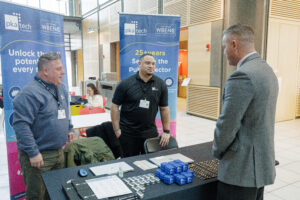
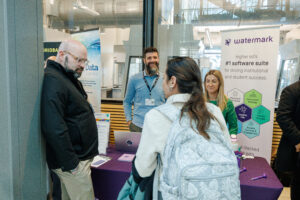
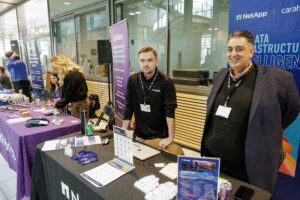
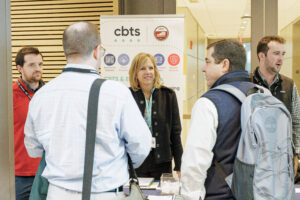
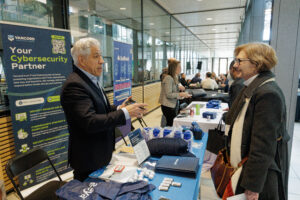
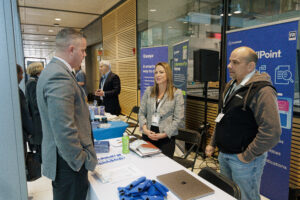



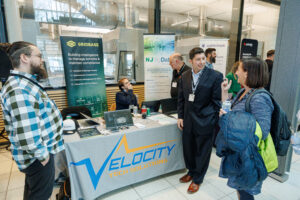

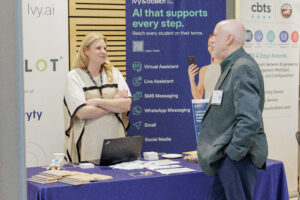



Thank you VIP Sponsors


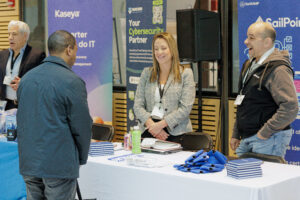
Thank you Exhibitor Sponsors

Abnormal

Anthology

Blackboard
CBTS
Checkpoint

Coursedog
datto - Vancord

eplus

Form Assembly

Ivy Ocelot Gravyty

NetApp

Nokia

Paloalto
PKA

Purestorage

Ring Central

Sailpoint

SHI

Softdocs

Velocity Tech

Voyatek

Watermark
Thank you Lanyard Sponsor
