AI in Action: Real-World Applications and Outcomes of the New Higher Education Paradigm
On October 9, 2025, EdgeCon Autumn, hosted in partnership with Rider University, brought together higher education technology leaders and professionals from across the region for a day dedicated to accelerating institutional modernization. From cybersecurity and cloud strategy to campus networks and AI-driven student support, the event offered deep dives into the most pressing challenges and opportunities facing colleges and universities today. Through an engaging keynote panel and a full slate of breakout sessions, attendees explored emerging technologies, exchanged actionable insights, and built meaningful connections with peers and industry-leading vendors committed to driving transformation across the higher ed landscape.



Responsible Innovation in the Age of AI
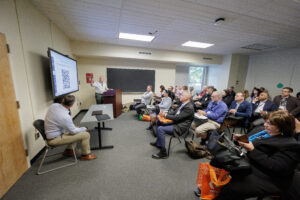
As artificial intelligence and emerging technologies rapidly transform our world, innovation must evolve beyond efficiency and novelty to reflect deeper human, ethical, and environmental priorities. Among the morning’s breakout sessions was Designing for the Whole: A Multidimensional Framework for Responsible Innovation in the Age of AI presented by Michael Edmondson, Associate Provost, New Jersey Institute of Technology (NJIT). He introduced a multidimensional framework for responsible innovation organized around four core domains: Performance & Design, Creative & Cognitive Dimensions, Human-Centered Values, and Ethical & Governance Principles. Each dimension includes four key attributes—from Functionality and Originality to Empathy and Integrity—that collectively offer a holistic model for evaluating and guiding innovation in the AI era.
Protecting your Data and Reducing Institutional Risk
The limitations of legacy on-premise ERP systems are increasingly evident as cybersecurity threats grow and data regulations evolve. In Protecting your Data and Reducing Institutional Risk: SaaS ERP vs. On-Premise System, Stephanie Druckenmiller, Executive Director, Enterprise Technologies, Northampton Community College, and Bryan McGowan, Workday Principal Enterprise Architect, Workday, explored how shifting to a modern SaaS ERP like Workday can strengthen data protection, reduce institutional risk, and ensure long-term compliance. Druckenmiller and McGowan compared SaaS and on-premise systems in terms of governance, cybersecurity, and regulatory alignment, to show how a unified cloud platform enables real-time visibility, audit readiness, and consistent policy enforcement.
The session also highlighted how AI and automation built into SaaS ERPs proactively detects and mitigates risks—capabilities often lacking in older systems. Attendees learned how Workday supports institutional resilience through faster recovery, ongoing updates, and simplified compliance with emerging legal standards, and gained practical strategies for protecting data and managing risk in the years ahead.
“Very informative. The vendors were all great”
– Cherri Green
Procurement Coordinator
Princeton Theological Seminary

Using AI to Improve Data Accessibility
Bharathwaj Vijayakumar, Assistant Vice President, and Samyukta Alapati, Associate Director from Rowan University’s Office of Institutional Research and Analytics, shared insights into one of their key initiatives: an AI-powered tool designed to provide faculty, staff, and administrators with faster, easier access to real-time institutional data without coding or complex reporting required. Rowan’s users can ask questions like, “How many students are enrolled in a specific program this term?” or “Which majors are growing the fastest?” and receive immediate, accurate answers. The goal is to eliminate technical barriers and put actionable data directly into the hands of those who need it for advising, planning, and decision-making.
While the tool runs on Python, ThoughtSpot, and web technologies behind the scenes, the user experience is designed with simplicity and usability in mind. During their session, attendees experienced live demonstrations and left with practical strategies for improving data accessibility and increasing operational efficiency within their own institutions.
Evolving Toward an AI-Enabled Data Ecosystem
For institutions aiming to keep pace with the demands of digital transformation, modernizing fragmented data systems is a critical first step. From Data Chaos to Clarity: Evolving Toward an AI-Enabled Data Ecosystem, presented by Randy Vollen, Director of Data & Business Intelligence, Miami University, and Jon Fairchild, Director, Cloud & Infrastructure, CBTS, shared insights from a recent data modernization initiative focused on building a cloud-first infrastructure, creating scalable reporting environments, and preparing for AI-driven use cases.
The presentation discussed the non-exclusive implementation approach that used commercially available platforms to support data integration across enterprise systems, including HR and financial systems. This strategy led to improved internal data coordination, more consistent access to analytics, and a solid foundation for the responsible adoption of AI and automation technologies. Their experience offered attendees a clear blueprint for driving data transformation across complex institutional landscapes and lessons learned from integrating enterprise platforms to streamline analytics.
"Appreciate these opportunities to gather and share knowledge.”
– Jeff Berliner
Chief Information Officer
Institute for Advanced Study

Cybersecurity Maturity Model Certification Framework
Bobby Rogers, Jr., Virtual Chief Information Security Officer, Edge, shared a practical, leader-focused overview of the Cybersecurity Maturity Model Certification (CMMC) framework, explaining why it matters even beyond Department of Defense-funded projects, and what higher education leaders need to do to prepare. Featuring real-world case studies, this presentation highlighted the actual risks of non-compliance and the chance to take the lead with Edge’s scalable cybersecurity solutions.
Attendees reviewed real-world examples of costly non-compliance, gained clarity on the requirements of CMMC 2.0 and its alignment with frameworks like GLBA and NIST 800-171, and explored how Edge supports institutions in navigating challenges unique to higher ed environments. The session concluded with an actionable roadmap to help campuses assess their current posture and begin preparing for future compliance requirements.
Designing Digital Learning Environments that Are Accessible, Equitable, and Sustainable
In response to the federal mandate that all public institutions comply with revised Title II of the Americans with Disabilities Act by April 2026, The College of New Jersey (TCNJ) has launched a coordinated initiative to improve the accessibility of digital course materials and online environments. TCNJ’s Judi Cook, Executive Director, Center for Excellence in Teaching and Learning; Ellen Farr, Director of Online Learning; and Mel Katz, Accommodations Support Specialist for Curriculum and Assessment, led the breakout session Beyond Compliance: Designing Digital Learning Environments that Are Accessible, Equitable, and Sustainable.
Rather than approaching compliance as a legal checkbox, TCNJ has framed the work to fundamentally improve student and faculty experiences through inclusive design, transparency, and collaboration. This presentation shared a case study in progress, tracing their institutional journey from grassroots collaboration and capacity-building to structured, strategic initiatives. The session also highlighted sustainable strategies for advancing accessibility and faculty development through systemic change and the importance of approaching accessibility not as a project with an endpoint, but as a continual part of the digital transformation of teaching and learning.







A Proactive Approach to Student Success
An expert panel from the College of Health Care Professions led by David Bent, Vice President, Digital Services, Online; Joshua Mouton, CHCP BI/Developer; and moderator, Ross Marino, Account Executive, Proactive AI Agent Specialist, NiCE, shared how the organization drove conversions and improved student outcomes with Proactive AI Agent. Attendees gained an inside scoop on their approach, including details of their initial build, guardrails, and how they’re continuously improving journeys with data-driven enhancements. They also highlighted how they used this innovative technology to not only create excellent student experiences but find opportunities for synergy within their organization.
Empowering Decision-Making and Driving Efficiency with Tableau Online
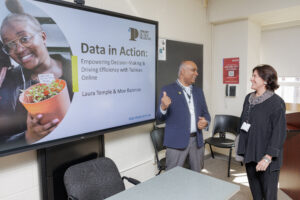
In the dynamic environment of higher education, data-driven decision-making is not a luxury, it's a necessity. Data in Action: Empowering Decision-Making and Driving Efficiency with Tableau Online led by Community College of Philadelphia’s Moe Rahman, AVP/CIO, and Laura Temple, Associate Director, explored how their community college leveraged Tableau to transform raw institutional data into interactive, insightful dashboards across key business areas including enrollment management, finance, student services, and academic affairs. By centralizing data visualization and analysis, they were able to empower stakeholders with real-time insights that drive efficiency, support strategic planning, and uncover opportunities for process improvement.
"Erin, Adam, and the entire team were outstanding. Great sessions too.”
– Ilya Yakovlev
Chief Information Officer
York College of PA

Protecting Privacy in the Age of AI Infused Pedagogy
With the increasing adoption of AI in educational environments, there are critical privacy and security considerations that arise. Teresa Keeler, Project Manager, NJIT, led the session, Protecting Privacy in the Age of AI Infused Pedagogy, and explored various ways AI is being utilized in education, from personalized learning platforms and intelligent tutoring systems to automated assessment tools, content generation, and administrative analytics. In higher education, this extends to research support, student success prediction, and advanced pedagogical tools.
Key concerns for many organizations include data storage, access protocols, the risk of de-anonymization, and the need to align with relevant data privacy regulations. Keeler discussed this “data dilemma” and the types of sensitive student and interaction data collected by AI tools. She also delved into the cybersecurity threats posed by AI, such as data breaches and sophisticated phishing attacks, and the challenge of AI-generated misinformation and its impact on academic integrity. Attendees learned about a proactive, multi-step approach for responsible AI integration, including developing clear institutional policies, conducting vendor vetting and providing comprehensive training for faculty and staff.
Modernizing Cybersecurity in Higher Ed
Modernizing Cybersecurity in Higher Ed: How Stevens IT Transformed User Risk Management explored how Stevens Institute of Technology overhauled its cybersecurity training by replacing outdated, static modules with a real-time, adaptive approach to user risk. Jeremy Livingston, CISO at Stevens, and David DellaPelle, CEO of Dune Security, discussed the implementation of Dune Security’s User Adaptive Risk Management platform, which enabled role-based testing and tailored training for faculty, staff, and students in response to increasingly personalized social engineering threats.
The session detailed how Stevens eliminated generic compliance training in under a month, introduced individual and departmental risk scoring, and integrated the platform with Workday and Okta to monitor user behavior and access. Attendees walked away with a blueprint for shifting from traditional awareness programs to action-oriented strategies, illustrating how educational institutions can build scalable, human-centered cybersecurity defenses.
"It was a nice event to attend and great to see some faces I hadn't seen in a while.”
– Ron Loneker Jr.
Director, IT Special Projects
Saint Elizabeth University
Real-World Applications and Outcomes of the New Higher Education Paradigm
EdgeCon’s keynote panel, AI in Action: Real-World Applications and Outcomes of the New Higher Education Paradigm, explored how artificial intelligence is actively transforming higher education, from teaching and research to campus services and operations. Featuring senior campus leaders Jeffrey Rubin, Senior Vice President for Digital Transformation and Chief Digital Officer, Syracuse University, and Devendra Mehta Digital Strategy and Data Analytics Officer, Fairleigh Dickinson University, the session showcased real-world case studies and data-driven strategies that demonstrate AI’s measurable impact across institutions.
The panelists shared practical insights on implementing AI at scale, highlighting lessons in policy development, digital strategy, and return on investment. Attendees gained actionable guidance on navigating the evolving AI landscape in academia, with a focus on delivering sustainable, high-impact solutions in today’s digital-first education environment.
Rethinking AI Readiness, Risk, and Responsibility
Higher education faces a pressing question: Are we truly ready to harness AI effectively, responsibly, and sustainably? In this breakout session, Nandini Janardhan, Programmer Analyst/Applications Manager, Fairleigh Dickinson University, and Sahana Varadaraju, Senior Application Developer, Rowan University, challenged institutions to go beyond AI awareness and critically assess their true readiness for responsible and sustainable adoption. They guided attendees through a comprehensive AI readiness framework covering technical infrastructure, institutional culture, and governance practices.
Participants learned to identify key barriers, ranging from financial constraints to ethical concerns, and evaluate sustainability through the lenses of equity, environmental impact, and algorithmic fairness. The session emphasized that effective AI implementation in higher education requires more than technology; it demands strategic alignment, thoughtful governance, and tailored solutions. Attendees left equipped with practical tools, including a self-assessment checklist and roadmap template, to begin or refine their institution’s AI journey.
"The breakouts were absolutely spectacular”
– Keri Salyards
Instructional Technologist
Mount Aloysius College

Turning Process, Architecture, and Data into Institutional Advantage
Strategic Foundations for AI: Turning Process, Architecture, and Data into Institutional Advantage debunked the myth that AI can be seamlessly integrated into higher education without foundational preparation. Instead, presenters emphasized that sustainable AI success starts with process clarity and disciplined system design. By mapping institutional operations across the student lifecycle and aligning enterprise architecture with mission, colleges and universities can create the strategic groundwork needed for AI to drive real impact.
Attendees learned about the importance of leadership in demanding alignment before adoption, treating data as a strategic asset through governance of the "Five Vs,” and preparing for real-time decision-making via HTAP platforms. Without these foundations, AI is a distraction; with them, AI becomes a catalyst for competitiveness, innovation, and student success.
Faculty-Informed Strategies to Improve Online Course Development
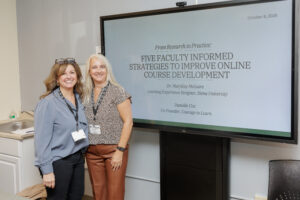
Based on qualitative research with faculty who collaborated on online course design, From Research to Practice: Five Faculty-Informed Strategies to Improve Online Course Development outlined five research-backed, actionable strategies to improve online teaching effectiveness and reduce faculty resistance. MaryKay McGuire, Ed.D, Learning Experience Designer, Siena College, and Danielle Cox, M.Ed. shared strategies to integrate adult learning theory into instructional design without overwhelming faculty, recommendations for improving collaboration between course designers and instructors, and ideas for scaling faculty support as AI and automation reshape online teaching. This session bridged the gap between institutional priorities and lived faculty experience offering a strategic and sustainable model for instructional improvement.








Solving the AI Faculty Development Puzzle
In Putting the Pieces Together: Solving the AI Faculty Development Puzzle, presenters Carly Hart, Director, Instructional Design & Technology, and Naomi Marmorstein, Associate Provost for Faculty Affairs, from Rutgers University-Camden explored the institution’s challenges and successes when implementing year-long, campus-wide AI faculty development programming. They shared how they navigated a wide spectrum of faculty attitudes, from enthusiastic early adopters to those who view generative AI as a fundamental threat to academic integrity. Their experience underscored that one-size-fits-all approaches fall short; instead, effective faculty development must address diverse pedagogical needs, discipline-specific concerns, and deeper philosophical questions around authorship, creativity, and knowledge creation in the age of AI.
Demystifying AI Adoption in Higher Education
For institutions looking to move beyond AI buzzwords and into real-world impact, the collaborative session, AI Unlocked: Resources, Policy, and Faculty Training, aim to demystify AI adoption in higher education from three critical vantage points. Dr. Forough Ghahramani, Associate Vice President for Research, Innovation, and Sponsored Programs, Edge, kicked things off with an insider’s tour of the National AI Research Resource (NAIRR) Pilot, an invaluable toolkit now available to educators and researchers nationwide. John Schiess, Technical Director. Office of Information Technology (OIT), Brookdale Community College, then explored institutional AI policy and regulation and shared actionable strategies for crafting guidelines that support innovation while managing risk.
Rounding out the session, Michael Qaissaunee, Professor and Co-Chair, Engineering and Technology, Brookdale Community College, revealed lessons learned from piloting faculty training programs designed to boost AI literacy and spark creative teaching applications. Attendees gained practical insights and walked away with curated instructional materials and resources to jumpstart their own AI journeys.
Learning Experience Design and Design Thinking Together
Brian Gall, Director, Learning Experience Design, Villanova University, examined the strategic expansion and integration of specialized design roles within Villanova University's Office of Online Programs in the session An Emerging Trend: Learning Experience Design and Design Thinking Together. Drawing from their organization’s structure, the session explored the distinct yet complementary roles of each design team member: Learning Experience Designers who focus on holistic student journey mapping and engagement strategies; Multimedia Experience Designers who create immersive, interactive content that enhances cognitive load and retention; and Instructional Designers who ensure the learning management system and learning technologies work together to achieve the goals of the faculty member.
Recognizing that not all institutions have the resources for extensive staffing, the session concluded with role hybridization models, technology solutions that amplify individual capacity, and practical strategies for implementing similar frameworks with smaller teams. Attendees also gained concrete tools for assessing their own organizational needs, building compelling cases for design team expansion, and implementing design thinking approaches regardless of team size.
"As always a great conference and networking event! Fantastic job done by the entire Edge Team! Thank You!”
– Ron Spaide
Chief Information Officer
Bergen Community College

Modernizing Virtual Desktop Delivery
Choosing the right virtual desktop solution is a critical yet complex decision for any institution. In this session, Chris Treib, Vice President of Information Technology, Geneva College, shared an insightful look into the college’s journey transitioning from VMware to Apporto. He shared Geneva College’s experience evaluating different virtual desktop approaches, the specific challenges they faced, and the factors that ultimately influenced their decision to explore alternatives.
The session offered valuable, real-world takeaways for IT leaders exploring or undergoing similar transitions. Attendees gained practical lessons on managing migration, evaluating platforms, and understanding the trade-offs involved. With a focus on outcomes and institutional fit, this session equipped decision-makers with the knowledge and confidence to assess their own virtual desktop strategies more effectively.
Path to GLBA Compliance
In the spring of 2024, Saint Elizabeth University was required to put into place compliance requirements for Gramm-Leach-Bliley Act (GLBA) to be in compliance with the FTC Safeguards Rule. During A Small University's Path to GLBA Compliance, Ron Loneker, Jr., Director, IT Special Projects at Saint Elizabeth University, presented how the university reacted to the requests of their auditors and how it was cleared by them and the Federal Student Aid Office. Following the presentation and Q&A, the session opened into an engaging discussion where other institutions shared their own challenges and experiences in working toward GLBA compliance.
Artificial Intelligence in Higher Education
As AI rapidly reshapes the academic landscape, it offers both transformative potential and pressing challenges. Artificial Intelligence in Higher Education: Threat or Opportunity? explored the four “evils” of artificial intelligence in higher education: The Hero, The Career Terminator, The Academic Cheat, and The Intel Spiller. Through real-world examples, the presentation examined how AI is impacting teaching roles, academic integrity, and data privacy, while also highlighting opportunities to enhance learning and streamline operations. This session also equipped attendees with practical strategies for ethical adoption, increased transparency, and meaningful collaboration, empowering institutions to leverage AI as a force for good rather than a disruptive threat.






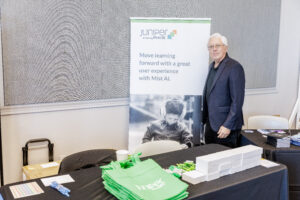
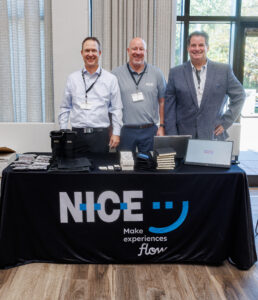
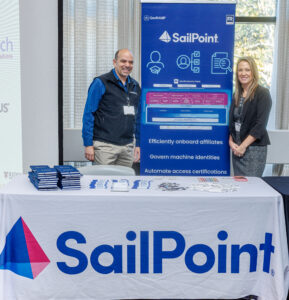


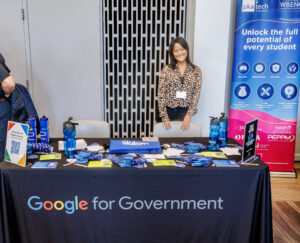
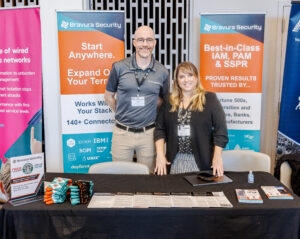

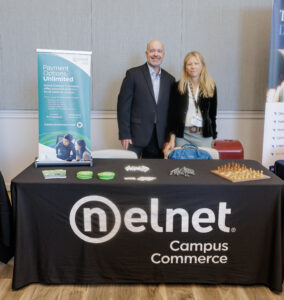


Thank you Exhibitor Sponsors